What is Peptide Stacking?
Peptide stacking is the practice of combining two or more peptides that target complementary biological pathways to achieve synergistic effects that exceed what any single compound delivers alone. The principle is grounded in pharmacological synergy — when compounds act through independent mechanisms on overlapping downstream outcomes, their combined effect can be greater than the sum of their individual contributions.
Effective stacking requires understanding which pathways each peptide targets and ensuring those pathways are genuinely complementary rather than redundant. Combining two peptides that activate the same receptor (like stacking two GLP-1 agonists) typically increases side effects without proportional benefit. Combining peptides that target different mechanisms toward the same goal — such as BPC-157's local angiogenesis with TB-500's systemic cell migration for healing — produces true synergy.
This guide covers the most well-documented peptide stacks organized by research objective: healing and recovery, weight management, anti-aging, and skin repair. Each stack includes the specific compounds, dosing protocols, cycle lengths, and links to the relevant Aura Peptides products.
Stack 1: The Wolverine Stack (Healing & Recovery)
BPC-157 + TB-500
- BPC-157: 250-500 mcg daily, subcutaneous injection near the injury site
- TB-500: 2-5 mg weekly (divided into 2-3 injections), subcutaneous anywhere
- Duration: 4-8 weeks
- Cycling: Some protocols use 3 months on, 6 weeks off
- Convenient option: BB20 Blend (AED 900) combines both in one vial
The Wolverine Stack is the most widely-used peptide combination in healing research. The name references the rapid regenerative abilities of the X-Men character, and the combination has earned this reputation through consistent anecdotal and preclinical results. BPC-157 works locally by enhancing VEGFR2 activity (angiogenesis), activating the FAK-paxillin pathway (cell migration to injury), and modulating NF-kB (anti-inflammatory). TB-500 works systemically through actin regulation (cell mobility), endothelial cell migration (granulation tissue), and distribution throughout the body to reach distant injury sites.
The synergy is clear: BPC-157 creates a healing-optimized environment at the specific injury site while TB-500 mobilizes the systemic cellular machinery needed for repair. A clinical case series has reported improved outcomes for joint injuries at higher combined doses of 4mg BPC + 6mg TB-500 administered intra-articularly. For most research protocols, inject BPC-157 as close to the injury site as anatomically practical and inject TB-500 into any subcutaneous site.
Stack 2: Advanced Healing Stack
BPC-157 + TB-500 + GHK-Cu
- BPC-157: 250-500 mcg daily (local injection)
- TB-500: 2-5 mg weekly (systemic)
- GHK-Cu: 1-2 mg, 2-3 times per week (subcutaneous)
- Duration: 4-12 weeks
- Products: KLOW Blend 80mg (AED 1,500) or individual compounds
Adding GHK-Cu to the Wolverine Stack introduces a third healing dimension. While BPC-157 and TB-500 focus on angiogenesis and cell migration, GHK-Cu addresses the extracellular matrix — stimulating collagen synthesis (up to 70% increase), modulating metalloproteinases for tissue remodeling, recruiting stem cells to injury sites, and upregulating over 4,000 genes toward healthier expression patterns. This triple combination addresses tissue repair at the vascular, cellular, and matrix levels simultaneously.
Stack 3: Weight Management Stack
Tirzepatide + AOD-9604
- Tirzepatide: 2.5mg weekly, escalating by 2.5mg every 4 weeks (max 15mg)
- AOD-9604: 300-500 mcg daily, morning fasted, 30-60 min before first meal
- Duration: 12-24 weeks
- Products: Tirzepatide 20mg (AED 900) + AOD-9604 (AED 529)
This stack combines the most potent incretin-based peptide with a targeted lipolytic compound. Tirzepatide suppresses appetite through dual GLP-1/GIP receptor activation, slows gastric emptying, and improves glucose metabolism. AOD-9604 (the fat-burning fragment of HGH, amino acids 176-191) adds targeted fat metabolism by stimulating lipolysis and inhibiting lipogenesis — without the IGF-1 elevation or growth-promoting effects of full HGH. Since these compounds act through completely independent mechanisms (hypothalamic appetite signaling vs. adipocyte-level fat oxidation), their effects are complementary.
Important: Do not stack two incretin-based peptides together (e.g., Tirzepatide + Retatrutide or Tirzepatide + Cagrilintide) as they share overlapping receptor targets. Start Tirzepatide first, stabilize on a maintenance dose, then add AOD-9604 to isolate any side effects.
Stack 4: Anti-Aging Stack
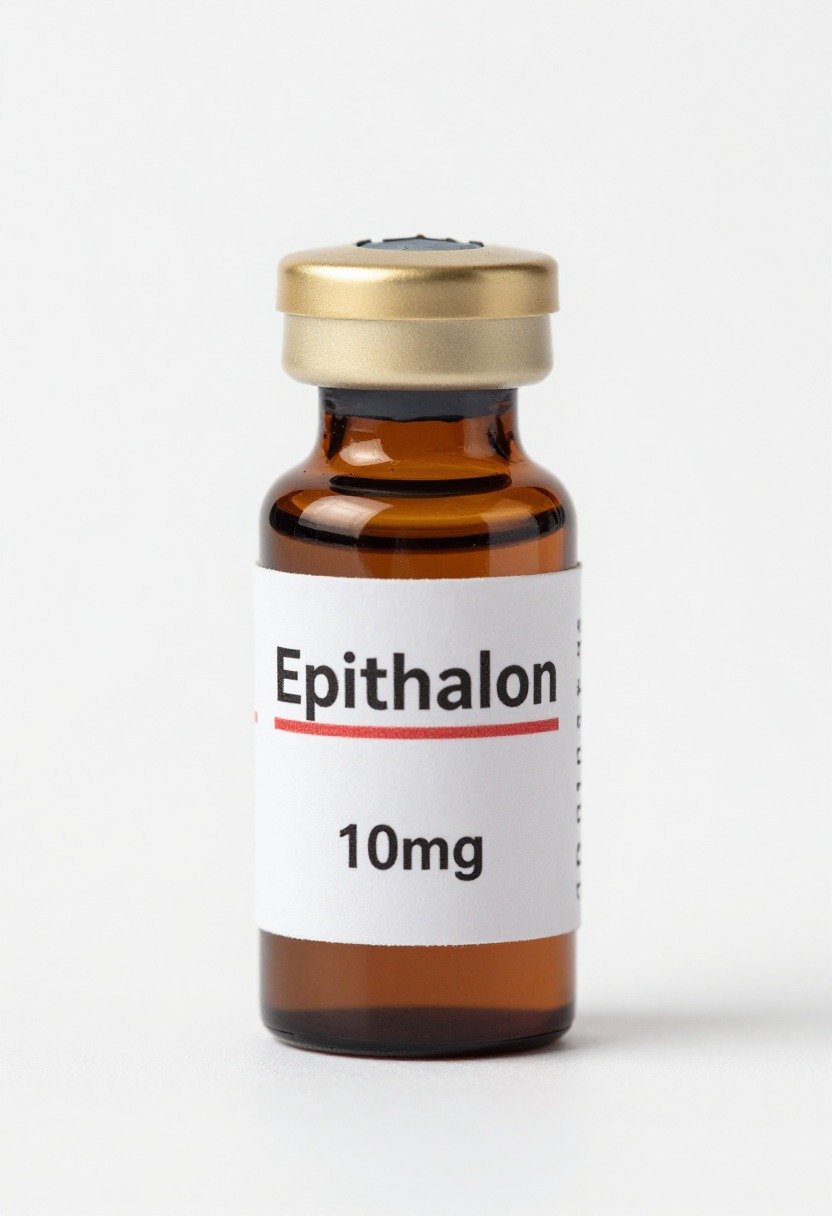
Epithalon + GHK-Cu + HGH
- Epithalon: 5-10mg daily for 10-20 day cycles, repeated 2-3x per year
- GHK-Cu: 1-2mg, 2-3 times per week (ongoing or 4-12 week cycles)
- HGH: 1-2 IU daily (low anti-aging dose), subcutaneous at bedtime
- Products: Epithalon 10mg (AED 529) + GHK-Cu 100mg (AED 900) + HGH 36IU (AED 1,200)
This stack addresses aging at three distinct biological levels. Epithalon works at the chromosomal level by activating telomerase to extend telomeres and stimulating pineal melatonin production for circadian rhythm regulation. GHK-Cu works at the extracellular matrix level, modulating 4,000+ genes, boosting collagen synthesis, and recruiting stem cells for tissue renewal. HGH works at the hormonal level through the GH/IGF-1 axis, supporting body composition (fat loss, lean mass gain), skin thickness and elasticity, bone density, and overall tissue repair capacity.
Epithalon is administered in short intensive cycles (10-20 days) rather than continuously, making it easy to integrate with ongoing GHK-Cu and HGH protocols. Administer Epithalon before bedtime to align with natural circadian melatonin production.
Stack 5: Skin Repair & Rejuvenation Stack
GHK-Cu + BPC-157
- GHK-Cu: 1-2mg daily or every other day (subcutaneous)
- BPC-157: 250-500mcg daily (subcutaneous)
- Duration: 4-12 weeks
- Products: GHK-Cu 50mg (AED 529) + BBG70 Blend (AED 1,200)
For skin-specific research, GHK-Cu provides the collagen synthesis, gene modulation, and antioxidant defense while BPC-157 adds angiogenesis and anti-inflammatory support. GHK-Cu directly addresses skin aging through wrinkle reduction (31.6% decrease in volume), improved firmness and elasticity, and enhanced skin thickness. BPC-157's VEGF-dependent pathways ensure adequate blood supply to skin tissue, accelerating nutrient delivery and waste removal. This combination is particularly relevant for post-procedure skin recovery research.
Stacking Safety Rules
- Start one compound at a time. Add each peptide individually with at least 1-2 weeks between additions to isolate any side effects.
- Do not stack peptides with the same receptor targets. Two GLP-1 agonists together increases side effects without proportional benefit.
- Lower starting doses when stacking. Synergy means combined effects can be stronger than expected. Start conservatively.
- Keep records. Log each compound, dose, timing, and any observations. This data is essential for optimizing protocols.
- Cycle appropriately. Most peptide protocols benefit from periodic breaks. Epithalon is inherently cycled (10-20 day blocks). BPC-157/TB-500 protocols typically run 4-8 weeks on, 2-4 weeks off.
- Store each compound properly. Reconstituted peptides need refrigeration at 2-8 degrees Celsius and should be used within 4-6 weeks.