Detailed Mechanism of Action
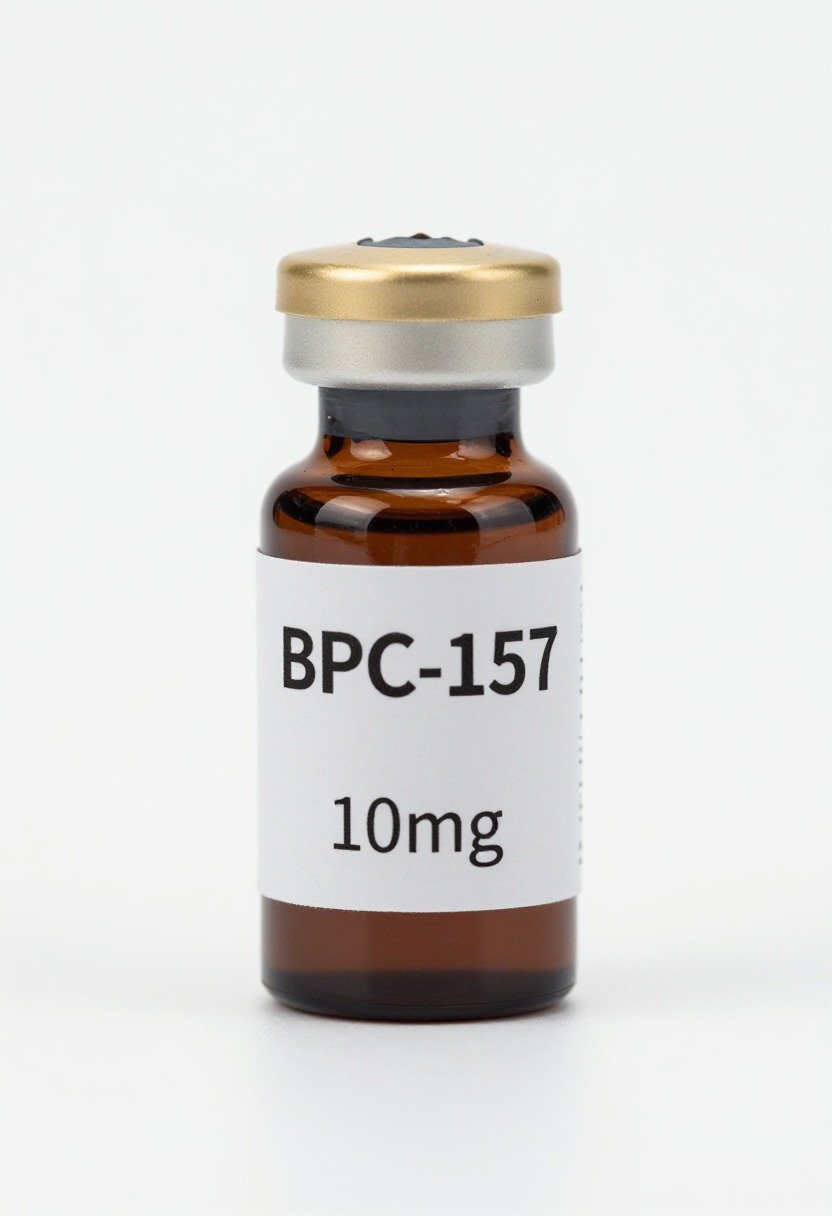
The KLOW Blend is the most comprehensive healing formulation in the Aura Peptides lineup, combining four synergistic peptides in a single 80mg vial: GHK-Cu (50mg) for skin rejuvenation and collagen restoration, BPC-157 (10mg) for targeted local tissue repair, TB-500 (10mg) for systemic healing and recovery, and KPV (10mg) for powerful anti-inflammatory modulation. This four-peptide architecture addresses the complete healing cascade — from initial inflammation control through active tissue repair to long-term matrix remodeling and skin quality restoration.
GHK-Cu, the largest component at 50mg, drives collagen Types I and III synthesis (up to 70% increase), modulates 4,000+ genes toward healthier expression, enhances antioxidant enzyme production, and recruits stem cells to repair sites. BPC-157 activates the VEGFR2 angiogenesis pathway, FAK-paxillin cell migration, and ERK1/2 tissue repair signaling while moderating inflammation via NF-kB modulation. TB-500 provides systemic healing through G-actin binding, endothelial cell migration, and stem cell differentiation — distributing through circulation to reach distant injury sites.
KPV (Lys-Pro-Val) is the distinguishing fourth component that elevates KLOW beyond the BBG70 blend. KPV is a naturally occurring tripeptide derived from alpha-melanocyte-stimulating hormone (alpha-MSH) that acts as a potent anti-inflammatory agent. It works by inhibiting pro-inflammatory cytokine production, modulating NF-kB signaling pathways, and reducing mucosal inflammation. KPV has shown particular promise in gut inflammation research, where it reduces colitis severity and promotes mucosal healing in preclinical models. Combined with BPC-157's gastric-derived cytoprotective properties, the KLOW blend creates a uniquely powerful formulation for gut-related healing research in addition to its musculoskeletal and skin applications.
Clinical Evidence
Each of the four KLOW components brings individual evidence supporting its inclusion. GHK-Cu's clinical data includes 31.6% wrinkle volume reduction (superior to Matrixyl 3000), 55.8% wrinkle volume reduction versus control, and measurable increases in skin thickness, density, and firmness. These are structural collagen-deposition effects, not superficial cosmetic changes. BPC-157's preclinical database spans accelerated healing across tendons, ligaments, muscles, bones, and GI tissue, with a 2025 human safety trial confirming tolerability at IV doses of 10-20mg.
TB-500 (Thymosin Beta-4 fragment) has demonstrated tissue regeneration properties in preclinical cardiac, musculoskeletal, and neurological models. Its parent compound has undergone human clinical trials for corneal healing with favorable outcomes. A clinical case series using combined BPC-157 + TB-500 at higher intra-articular doses reported improved joint injury outcomes, supporting the Wolverine Stack combination concept that forms the foundation of the KLOW formula.
KPV's evidence base is primarily preclinical but compelling. Studies have demonstrated significant anti-inflammatory effects across multiple models: reduced colitis severity and mucosal inflammation in inflammatory bowel disease models, suppression of pro-inflammatory cytokine cascades, and modulation of NF-kB signaling. KPV's alpha-MSH derivative status connects it to a well-characterized receptor system (melanocortin receptors) with established anti-inflammatory biology. The combination of KPV with BPC-157 creates a particularly strong rationale for gut-healing research, as both compounds independently demonstrate gastrointestinal protective and healing properties through different mechanisms — BPC-157 via angiogenesis and tissue repair, KPV via direct anti-inflammatory cytokine modulation.
Dosing Protocol
The KLOW Blend provides all four peptides in a single lyophilized vial (80mg total), eliminating the complexity of managing four separate compounds, reconstitutions, and injection schedules. For reconstitution, adding 2mL of bacteriostatic water creates a solution containing approximately 25mg/mL GHK-Cu, 5mg/mL BPC-157, 5mg/mL TB-500, and 5mg/mL KPV.
A standard daily injection of 0.1mL (10 units on a U-100 insulin syringe) delivers approximately 2.5mg GHK-Cu, 500mcg BPC-157, 500mcg TB-500, and 500mcg KPV — all within standard therapeutic ranges for each compound. At this dose, the vial provides approximately 20 days of supply. A more conservative protocol using 0.05mL daily extends supply to 40 days. For gut-healing focused protocols, injecting in the abdominal subcutaneous tissue provides proximity to the GI tract. For musculoskeletal applications, injecting near the injury site maximizes BPC-157's localized effects.
Standard KLOW protocols run 4-12 weeks depending on research objectives. For acute healing applications, 4-8 weeks is typical. For comprehensive skin rejuvenation and anti-aging protocols, 8-12 weeks allows GHK-Cu's collagen synthesis effects to fully develop. The KPV component provides ongoing anti-inflammatory support throughout the protocol, creating a smoother healing environment for the other three compounds to operate in. After the active phase, some protocols transition to 2-3 injections per week for maintenance. For research purposes only — consult qualified medical professionals for all protocol decisions.
Side Effects & Safety
All four components of the KLOW Blend are generally well-tolerated based on available research. BPC-157's 2025 human safety trial confirmed no adverse effects on cardiac, hepatic, renal, thyroid, or glucose biomarkers. TB-500 is derived from Thymosin Beta-4, a protein found in virtually all human cells, contributing to baseline tolerability. GHK-Cu is endogenously produced by the human body. KPV is derived from alpha-MSH, a naturally occurring hormone with well-characterized receptor biology.
Injection site reactions (mild redness, temporary discomfort) are the most commonly reported side effect and are consistent with subcutaneous injection protocols generally rather than being compound-specific. The GHK-Cu copper component requires awareness in subjects with Wilson's disease, who should avoid copper-containing compounds. KPV, as a melanocortin-derived peptide, may theoretically affect pigmentation at very high doses, though the 10mg total content in the KLOW blend is well below levels expected to produce pigmentation changes.
None of the four components significantly affects hormonal axes, glucose metabolism, or cardiovascular parameters at standard research doses. BPC-157 and TB-500 are prohibited by WADA and are not FDA-approved for any indication. Theoretical concerns about angiogenic and cell-migration compounds in the context of pre-existing tumors apply to this blend's BPC-157 and TB-500 components. Contraindications include hypersensitivity to any component, Wilson's disease, active malignancy, pregnancy, and breastfeeding. This product is for research purposes only.
Storage & Reconstitution
Store the lyophilized KLOW Blend vial at 2-8°C (36-46°F) before reconstitution. The sealed vial may be stored at -20°C for long-term preservation. Protect from light — important for the GHK-Cu copper complex, which is susceptible to photo-oxidation. The four peptides maintain stability when co-lyophilized in a single matrix, and the blend has been formulated to ensure compatibility between all components.
Reconstitute with bacteriostatic water (0.9% benzyl alcohol). Clean both vial stoppers with alcohol swabs. Draw 2mL of BAC water using a 21-25 gauge needle and inject slowly along the glass wall. Do not shake — gently swirl or roll between palms until dissolved. The KLOW solution may exhibit a faint blue tint from the GHK-Cu copper complex; this is normal. Due to the 80mg total peptide content, dissolution may require 3-5 minutes of gentle agitation. The solution must be clear without visible particulates.
After reconstitution, store at 2-8°C and use within 28 days. Never freeze reconstituted KLOW. In the UAE, where summer temperatures exceed 45°C, cold chain management is especially important for multi-peptide blends. Degradation of any single component compromises the entire formulation — a four-peptide blend has four potential degradation pathways, making temperature control even more critical than for single compounds. Return the vial to the refrigerator immediately after each use. Use insulated transport bags with cold packs during transit. Verify delivery packaging integrity upon receipt and consider ordering during cooler months when possible.
Frequently Asked Questions
What is the KLOW Blend?
KLOW is a 4-peptide healing and rejuvenation blend: GHK-Cu (50mg) for skin/collagen, BPC-157 (10mg) for tissue repair, TB-500 (10mg) for systemic healing, and KPV (10mg) for anti-inflammatory support. At 80mg total, it is the most comprehensive healing formulation available, addressing inflammation, repair, regeneration, and matrix remodeling in a single vial.
How does KLOW differ from BB20 and BBG70?
BB20 = BPC-157 + TB-500 (Wolverine Stack only, 20mg). BBG70 = BB20 + GHK-Cu (adds skin rejuvenation, 70mg). KLOW = BBG70 + KPV (adds anti-inflammatory modulation, 80mg). Each successive blend builds on the previous one. KLOW is the most complete option, particularly for gut-healing and inflammatory condition research.
What makes KPV important in the KLOW formula?
KPV is a potent anti-inflammatory tripeptide derived from alpha-MSH. It inhibits pro-inflammatory cytokines, modulates NF-kB signaling, and reduces mucosal inflammation. Combined with BPC-157's gastric-derived healing properties, KPV creates a powerful dual mechanism for gut-healing research. It also provides a smoother inflammatory environment for all four compounds to operate in.
How should KLOW Blend be dosed?
Reconstitute with 2mL BAC water. Standard dose: 0.1mL daily (2.5mg GHK-Cu, 500mcg BPC-157, 500mcg TB-500, 500mcg KPV). Conservative: 0.05mL daily. Provides 20-40 days per vial. Protocols run 4-12 weeks. Inject subcutaneously, near injury sites when feasible.
How should KLOW Blend be stored?
Store lyophilized at 2-8°C. After reconstitution, refrigerate and use within 28 days. Solution may have a faint blue tint (normal from copper). Never freeze. In the UAE, cold chain management is critical — a 4-peptide blend has 4 potential degradation pathways, making temperature control especially important.
Disclaimer: This product is sold for laboratory research purposes only. Not for human consumption. All information provided is for educational purposes and does not constitute medical advice. Consult a qualified healthcare provider before starting any peptide protocol.