Detailed Mechanism of Action
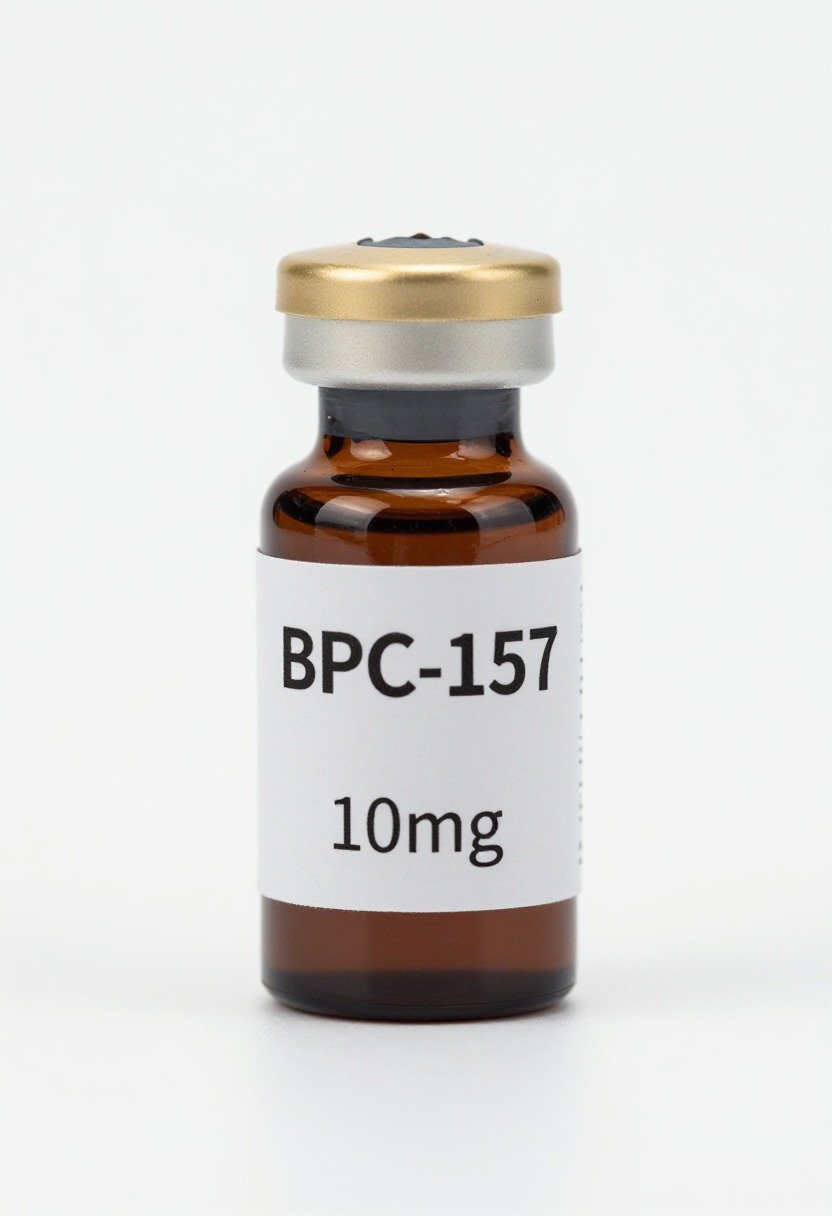
The BBG70 Blend is an advanced triple-peptide formulation combining three synergistic compounds: BPC-157 (10mg) for targeted tissue repair, GHK-Cu (50mg) for skin regeneration and collagen production, and TB-500 (10mg) for systemic healing — totaling 70mg of active healing peptides in a single vial. This blend builds upon the BB20 "Wolverine Stack" by adding the powerful skin-rejuvenation and anti-aging properties of GHK-Cu, creating a comprehensive healing and regeneration protocol that addresses tissue repair, extracellular matrix remodeling, and systemic recovery simultaneously.
BPC-157 (Body Protection Compound-157) drives local tissue repair through the VEGFR2-PI3K-Akt-eNOS angiogenesis pathway, FAK-paxillin cell migration signaling, and NF-kB modulation for controlled inflammation. TB-500 (Thymosin Beta-4 fragment) complements this with systemic healing via G-actin binding, endothelial cell migration, and stem cell differentiation — distributing through circulation to reach injury sites throughout the body that BPC-157's localized action may not fully address.
The addition of GHK-Cu (50mg — the largest component by weight) introduces a fundamentally different regenerative dimension. GHK-Cu stimulates collagen Types I and III synthesis (up to 70% increase), affects 4,000+ genes toward healthier expression patterns, enhances antioxidant enzyme production (SOD), reduces pro-inflammatory cytokines (TNF-alpha-mediated IL-6, NF-kB pathway), and recruits stem cells to repair sites. This creates a three-layer healing approach: BPC-157 for acute tissue repair, TB-500 for systemic recovery, and GHK-Cu for matrix remodeling, collagen restoration, and long-term tissue quality improvement.
Clinical Evidence
While no single clinical trial has evaluated the BBG70 three-peptide combination, each component brings substantial individual evidence. BPC-157's preclinical database includes accelerated healing of tendons, ligaments, muscles, bones, and GI tissue across multiple animal models, with a 2025 pilot human safety trial confirming no adverse effects at IV doses of 10-20mg. TB-500 (Thymosin Beta-4) has demonstrated cardioprotective and tissue regeneration properties in preclinical models, with its parent compound undergoing human clinical trials for corneal healing.
GHK-Cu brings the most extensive clinical skin data of the three components. Controlled studies showed 31.6% wrinkle volume reduction (superior to Matrixyl 3000), 55.8% wrinkle volume reduction and 32.8% wrinkle depth reduction versus control, with measurable improvements in skin firmness, elasticity, clarity, thickness, and density. In wound healing research, GHK-Cu demonstrated enhanced wound contraction, increased granulation tissue, stimulated angiogenesis, and improved collagen gene expression. One-month topical application studies showed significant collagen effects in 70% of female participants.
The scientific rationale for combining all three peptides is grounded in complementary wound healing biology. BPC-157 initiates repair through blood vessel formation and cell recruitment at injury sites. TB-500 accelerates the process through systemic cell migration and anti-inflammatory modulation. GHK-Cu then supports long-term tissue quality through collagen deposition, matrix remodeling, and gene expression optimization. A clinical case series using combined BPC-157 + TB-500 (at higher intra-articular doses) reported improved joint injury outcomes, supporting the combination concept. The addition of GHK-Cu extends the protocol's benefits to skin quality, anti-aging, and extracellular matrix health.
Dosing Protocol
The BBG70 Blend provides all three peptides in a single lyophilized vial, eliminating the complexity of managing three separate reconstitutions and injection schedules. For reconstitution, adding 2mL of bacteriostatic water creates a solution containing 5mg/mL BPC-157, 25mg/mL GHK-Cu, and 5mg/mL TB-500. A daily injection of 0.1mL (10 units on a U-100 insulin syringe) delivers approximately 500mcg BPC-157, 2.5mg GHK-Cu, and 500mcg TB-500 — well within the standard therapeutic ranges for each compound.
At this daily dose, the vial provides approximately 20 days of supply. Alternatively, a more conservative protocol using 0.05mL daily (250mcg BPC-157, 1.25mg GHK-Cu, 250mcg TB-500) extends the supply to 40 days. For subjects focused primarily on skin regeneration and anti-aging (rather than acute injury repair), an every-other-day protocol delivers adequate GHK-Cu exposure while conserving compound. Inject subcutaneously in the abdomen, thigh, or upper arm, rotating sites systematically.
Standard BBG70 protocols run 4-12 weeks depending on the research objectives. For acute injury repair, 4-8 weeks is typical. For skin rejuvenation and anti-aging applications, 8-12 weeks allows GHK-Cu's collagen synthesis effects to fully develop (meaningful skin changes begin at 4-8 weeks). After the active phase, some protocols transition to maintenance dosing of 2-3 injections per week. The BBG70 can serve as the foundation of a comprehensive healing and regeneration protocol, with the KLOW blend offering a 4-peptide upgrade that adds KPV anti-inflammatory support. For research purposes only.
Side Effects & Safety
All three components of the BBG70 Blend are generally well-tolerated in the available research literature. BPC-157's 2025 human safety trial confirmed no adverse effects on cardiac, hepatic, renal, thyroid, or glucose biomarkers. TB-500, derived from the ubiquitous Thymosin Beta-4 protein, has demonstrated consistent tolerability. GHK-Cu is a naturally occurring compound that the human body produces endogenously, contributing to its favorable safety profile.
Injection site reactions (mild redness, temporary discomfort) are the most commonly reported side effect across all three components and are consistent with subcutaneous injection protocols generally. The GHK-Cu copper component warrants awareness in subjects with Wilson's disease (a genetic copper accumulation disorder) — this population should avoid copper-containing compounds. GHK-Cu's short plasma half-life (~30 minutes) limits systemic copper exposure per injection, and the copper delivered at standard doses is minimal relative to dietary intake.
None of the three components affects hormonal axes, glucose metabolism, or cardiovascular parameters at standard research doses. Both BPC-157 and TB-500 are prohibited by WADA and are not FDA-approved for any indication. The theoretical concern around angiogenic and cell migration compounds in the context of pre-existing tumors applies to this blend, though no such events have been reported. Contraindications include known hypersensitivity to any component, Wilson's disease, active malignancy, pregnancy, and breastfeeding. This product is for research purposes only.
Storage & Reconstitution
Store the lyophilized BBG70 Blend vial at 2-8°C (36-46°F) before reconstitution. The sealed vial may be stored at -20°C for long-term preservation. Protect from light — particularly important due to the GHK-Cu copper complex, which may be sensitive to photo-oxidation. Keep in original packaging or wrap in aluminum foil. The three peptides maintain stability when co-lyophilized in a single matrix.
Reconstitute with bacteriostatic water (0.9% benzyl alcohol). Clean both vial stoppers with alcohol swabs. Using a 21-25 gauge needle, draw 2mL of BAC water and inject slowly along the glass wall of the peptide vial. Do not shake — gently swirl or roll between palms until completely dissolved. The BBG70 solution may have a very faint blue tint from the GHK-Cu copper complex; this is normal and expected. The solution should be clear without visible particulates. Due to the higher total peptide content (70mg), dissolution may take slightly longer than smaller vials — allow up to 3-5 minutes of gentle swirling.
After reconstitution, store at 2-8°C and use within 28 days. Never freeze reconstituted BBG70. In the UAE climate, where summer temperatures exceed 45°C, cold chain management is critical for all peptide products — and particularly for multi-peptide blends where degradation of any single component compromises the entire formulation. Return the vial to the refrigerator immediately after each use. Use insulated transport bags with cold packs. Verify delivery packaging integrity upon receipt.
Frequently Asked Questions
What is the BBG70 Blend?
BBG70 is an advanced 3-peptide blend: BPC-157 (10mg) for tissue repair, GHK-Cu (50mg) for skin regeneration and collagen production, and TB-500 (10mg) for systemic healing — 70mg total. It builds on the BB20 Wolverine Stack by adding GHK-Cu's powerful anti-aging and extracellular matrix remodeling properties.
How does BBG70 differ from the BB20 Blend?
BBG70 adds 50mg of GHK-Cu to the BB20 formula. While BB20 focuses on tissue healing (BPC-157 + TB-500), BBG70 extends the protocol to include skin rejuvenation, collagen stimulation, and anti-aging benefits. The GHK-Cu component addresses 4,000+ genes and produces measurable wrinkle reduction (31.6-55.8% in clinical studies).
Can BBG70 be used for skin rejuvenation research?
Yes, the high-dose GHK-Cu (50mg) makes BBG70 particularly suited for skin rejuvenation. GHK-Cu stimulates collagen Types I and III, modulates gene expression, and enhances antioxidant defenses. Hydration improvements appear in 1-2 weeks; meaningful skin texture and firmness improvements at 4-8 weeks. BPC-157 and TB-500 support the underlying tissue repair.
What is the recommended dosing protocol?
Reconstitute with 2mL BAC water. Standard dose: 0.1mL daily (500mcg BPC-157, 2.5mg GHK-Cu, 500mcg TB-500). Conservative dose: 0.05mL daily. The vial provides 20-40 days depending on dose. Protocols run 4-12 weeks. Inject subcutaneously near injury sites when applicable.
How should BBG70 Blend be stored?
Store the lyophilized vial at 2-8°C. After reconstitution, refrigerate and use within 28 days. A faint blue tint is normal (copper complex). Never freeze. In the UAE, maintain strict cold chain protocols — degradation of any component compromises the entire formulation.
Disclaimer: This product is sold for laboratory research purposes only. Not for human consumption. All information provided is for educational purposes and does not constitute medical advice. Consult a qualified healthcare provider before starting any peptide protocol.