Detailed Mechanism of Action
The BB20 Blend — known as the "Wolverine Stack" — combines two of the most extensively studied healing peptides in a single convenient vial: BPC-157 (10mg) for targeted local tissue repair and TB-500 (10mg) for systemic healing. These two peptides work through fundamentally different but complementary molecular pathways, creating a synergistic healing effect that exceeds what either compound achieves independently. The combination has earned its nickname from the remarkably accelerated recovery observed in preclinical research models.
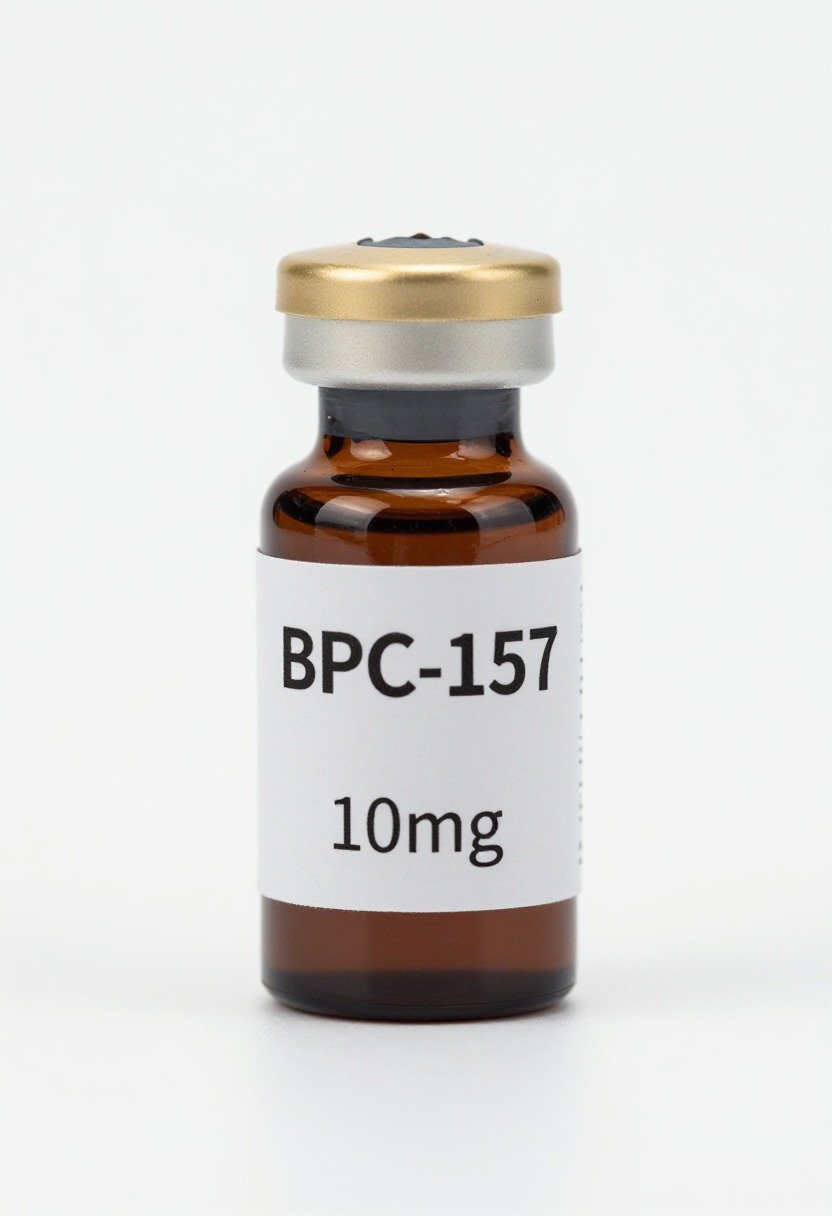
BPC-157 (Body Protection Compound-157) is a synthetic 15-amino acid peptide derived from human gastric juice protein. Its primary mechanism involves enhancement of the VEGFR2-PI3K-Akt-eNOS pathway, which promotes angiogenesis — the formation of new blood vessels at injury sites. BPC-157 also activates the FAK-paxillin pathway (promoting cell migration to injury sites), ERK1/2 signaling (facilitating endothelial and muscle repair), and modulates NF-kB signaling to reduce excessive inflammation while preserving the inflammatory response necessary for healing. Its origin as a gastric juice compound gives it natural cytoprotective properties, protecting against NSAIDs, alcohol, and other GI-damaging agents.
TB-500 (Thymosin Beta-4 fragment) contains the active region of Thymosin Beta-4, a 43-amino acid peptide found in virtually all human cells. Its primary mechanism is high-affinity binding to monomeric G-actin, which sequesters actin monomers and promotes the cell migration essential for wound repair. TB-500 drives endothelial cell migration and tubule formation, promotes new blood vessel growth, reduces inflammatory cytokines, upregulates stem cell differentiation factors, and distributes systemically through circulation — reaching distant injury sites that BPC-157's more localized action might not reach. Together, BPC-157 handles targeted local repair while TB-500 provides whole-body healing support.
Clinical Evidence
While no combined BPC-157 + TB-500 clinical trials exist, each component has individual evidence supporting its healing properties. BPC-157 has an extensive preclinical database spanning multiple tissue types: accelerated healing of tendons, ligaments, muscles, and bones in animal models; protection against and healing of GI ulcers, inflammatory bowel lesions, and fistulas; neuroprotective effects with nerve repair demonstrated in sciatic nerve crush models; blood pressure stabilization and endothelial protection; and hepatoprotective effects against various toxins.
The first human safety data for BPC-157 emerged in 2025 from a pilot study evaluating intravenous infusion at 10mg and 20mg doses. No adverse effects on cardiac, hepatic, renal, thyroid, or glucose biomarkers were detected, and the peptide was well-tolerated — providing important safety confirmation after decades of preclinical-only evidence. TB-500's parent compound, Thymosin Beta-4, has undergone clinical trials for corneal healing (as eye drops), with favorable results. Thymosin Beta-4 has also demonstrated cardioprotective properties in animal models, including cardiac tissue regeneration following myocardial infarction.
A clinical case series reported improved outcomes for joint injuries when using higher combined doses (4mg BPC-157 + 6mg TB-500 administered intra-articularly), providing preliminary human evidence for the combination approach. The complementary mechanism — BPC-157's local angiogenesis and tissue repair paired with TB-500's systemic cell migration and whole-body recovery — has a strong theoretical foundation in wound healing biology, even as formal randomized controlled trials for the combination remain needed.
Dosing Protocol
The BB20 Blend contains BPC-157 (10mg) and TB-500 (10mg) in a single lyophilized vial, simplifying what would otherwise require two separate reconstitutions and injection protocols. Standard dosing for the Wolverine Stack involves daily or every-other-day subcutaneous injections, with the injection preferably administered near the site of injury when anatomically feasible (to maximize BPC-157's localized effects) while allowing TB-500's systemic distribution through normal circulation.
For reconstitution, adding 2mL of bacteriostatic water to the BB20 vial creates a combined concentration of 5mg/mL BPC-157 and 5mg/mL TB-500. A typical daily dose might use 0.1mL (10 units on a U-100 insulin syringe), delivering 500mcg BPC-157 + 500mcg TB-500 per injection, providing 20 days of supply per vial. Alternatively, using 0.05mL (5 units) per injection delivers 250mcg of each peptide for a more conservative protocol, extending the vial to 40 days of daily use.
Typical healing protocols run 4-8 weeks, with some subjects extending to 12 weeks for more severe or chronic injuries. After the active healing phase, some protocols transition to a maintenance phase of 2-3 injections per week. BPC-157 can be injected near the injury site (knee, shoulder, elbow, etc.) for localized benefit, while the TB-500 component will distribute systemically regardless of injection location. For GI healing applications, abdominal subcutaneous injection is standard. For research purposes only — consult qualified medical professionals for all protocol decisions.
Side Effects & Safety
Both BPC-157 and TB-500 are generally well-tolerated in the available research literature, with no serious adverse events attributed to either compound in published studies. BPC-157's first human safety trial (2025) confirmed no adverse effects on cardiac, hepatic, renal, thyroid, or glucose biomarkers at doses of 10-20mg intravenously — substantially higher than typical subcutaneous research doses. The compound's origin as a fragment of a naturally occurring gastric juice protein contributes to its favorable tolerability profile.
TB-500, derived from the ubiquitous Thymosin Beta-4 protein found in nearly all human cells, is similarly well-tolerated. Injection site reactions (mild redness, temporary discomfort) are the most commonly reported side effect for both compounds and are consistent with any subcutaneous injection protocol rather than compound-specific effects. Some subjects report temporary fatigue or headache during the initial days of TB-500 loading, which typically resolves as the body adjusts.
Both BPC-157 and TB-500 are prohibited by WADA (World Anti-Doping Agency) and are not FDA-approved for any therapeutic indication. Neither compound has undergone large-scale randomized controlled human trials, and the evidence base consists primarily of preclinical studies and limited human data. As with all bioactive compounds, theoretical concerns exist around promoting growth in pre-existing tumors (given the angiogenic and cell migration properties), though no such events have been reported. Contraindications include known hypersensitivity, active malignancy, pregnancy, and breastfeeding. This product is for research purposes only.
Storage & Reconstitution
Store the lyophilized BB20 Blend vial at 2-8°C (36-46°F) before reconstitution. The sealed vial may be stored at -20°C for extended preservation. Protect from light and moisture. The blend contains two different peptides in a single lyophilized matrix — both BPC-157 and TB-500 maintain stability when co-lyophilized, which is why the single-vial blend format is practical.
Reconstitute with bacteriostatic water (0.9% benzyl alcohol). Clean both vial stoppers with alcohol swabs. Using a 21-25 gauge needle, draw 2mL of BAC water. Inject slowly into the peptide vial along the glass wall — never spray directly onto the powder or shake. Gently swirl or roll between palms until fully dissolved. The solution should be clear and colorless. Adding 2mL creates 5mg/mL of each peptide; a 0.1mL injection (10 units) delivers 500mcg BPC-157 + 500mcg TB-500.
After reconstitution, store at 2-8°C and use within 28 days. Never freeze reconstituted solution. In the UAE, where temperatures frequently exceed 45°C in summer, cold chain management is critical. Both BPC-157 and TB-500 are susceptible to heat-induced degradation. Return the vial to the refrigerator immediately after drawing each dose. Use insulated transport bags with cold packs for any movement. Verify delivery packaging integrity upon receipt. The BB20 blend eliminates the need to manage two separate vials, simplifying storage logistics compared to purchasing BPC-157 and TB-500 individually.
Frequently Asked Questions
What is the BB20 Blend?
BB20 is the classic "Wolverine Stack" — BPC-157 (10mg) and TB-500 (10mg) combined in a single vial. BPC-157 provides targeted local tissue repair through angiogenesis and VEGF-mediated healing. TB-500 delivers systemic healing through actin regulation and cell migration. Together, they create synergistic recovery support that exceeds either compound alone.
What conditions is BB20 Blend used for in research?
BB20 is studied for tendon and ligament repair, muscle injury recovery, gut healing (BPC-157's gastric origin makes it particularly relevant), joint inflammation, general tissue regeneration, and post-surgical recovery. The dual-peptide combination addresses both localized injury repair and whole-body healing processes simultaneously.
How should BB20 Blend be administered?
Reconstitute with 2mL bacteriostatic water. Standard dose: 0.1mL daily (500mcg each peptide) or 0.05mL daily (250mcg each) for a conservative approach. Inject subcutaneously near the injury site when feasible. Protocols typically run 4-8 weeks. The vial provides 20-40 days of supply depending on dose level.
How does BB20 differ from buying BPC-157 and TB-500 separately?
BB20 combines both peptides in the correct Wolverine Stack ratio in a single vial, eliminating the need for two reconstitutions, two storage vials, and two separate injections. It is more convenient and ensures both compounds are administered at a consistent ratio with every dose.
How should BB20 Blend be stored?
Store the lyophilized vial at 2-8°C. After reconstitution, refrigerate and use within 28 days. Never freeze. In the UAE, maintain strict cold chain management — the single-vial format simplifies storage logistics compared to managing two separate peptide vials.
Disclaimer: This product is sold for laboratory research purposes only. Not for human consumption. All information provided is for educational purposes and does not constitute medical advice. Consult a qualified healthcare provider before starting any peptide protocol.