The Complete Weight Loss Peptide Ranking
The peptide landscape for weight management has transformed dramatically. What began with modest GLP-1 analogs has evolved into a field where triple-receptor agonists routinely achieve 25-29% body weight reductions in clinical trials. For researchers in the UAE and globally, understanding which compounds deliver the best results — and through which mechanisms — is essential for designing effective protocols.
This guide ranks the five most important weight management peptides in 2026, based on clinical trial data, mechanism of action, safety profiles, and practical considerations. Each compound serves a different research niche, and the optimal choice depends on your specific objectives.
2026 Weight Loss Peptide Rankings
#1 Retatrutide (28.7%) > #2 Tirzepatide (22.5%) > #3 Semaglutide/CagriSema (20.4%) > #4 AOD-9604 (targeted fat loss) > #5 Cagrilintide (11.5% standalone)
#1 Retatrutide — The Triple Agonist King
Retatrutide (LY3437943)
Retatrutide holds the record for the highest weight loss achieved by any compound in a Phase 3 clinical trial. In TRIUMPH-4 (68 weeks, obesity + knee OA), the 12mg dose produced an average 28.7% body weight reduction — equivalent to 71.2 lbs (32.3 kg). The weight loss curve had not fully plateaued, suggesting even greater reductions with longer treatment.
Mechanism: Retatrutide is unique as a triple agonist. GLP-1 suppresses appetite and slows gastric emptying. GIP enhances metabolic efficiency and amplifies weight loss. The glucagon receptor — the third, differentiating component — increases energy expenditure through hepatic lipid oxidation, promotes thermogenesis, and directly reduces liver fat. This three-pronged approach addresses both caloric intake AND output.
Phase 2 Data (NEJM 2023): 12mg dose achieved -24.2% at 48 weeks (N=338). Type 2 diabetes cohort: up to -16.9% weight, -2.2% HbA1c. Demonstrated significant liver fat reduction in MASLD/NASH Phase 2a.
Pros
- Highest weight loss of any compound (28.7%)
- Triple mechanism covers intake + expenditure
- Liver fat reduction (MASLD potential)
- Joint pain relief demonstrated
- Once-weekly dosing
Cons
- Not yet FDA-approved
- Limited long-term safety data
- Higher GI side effects at top dose
- Premium research compound pricing
- Phase 3 program still reporting
#2 Tirzepatide — The Proven Dual Agonist
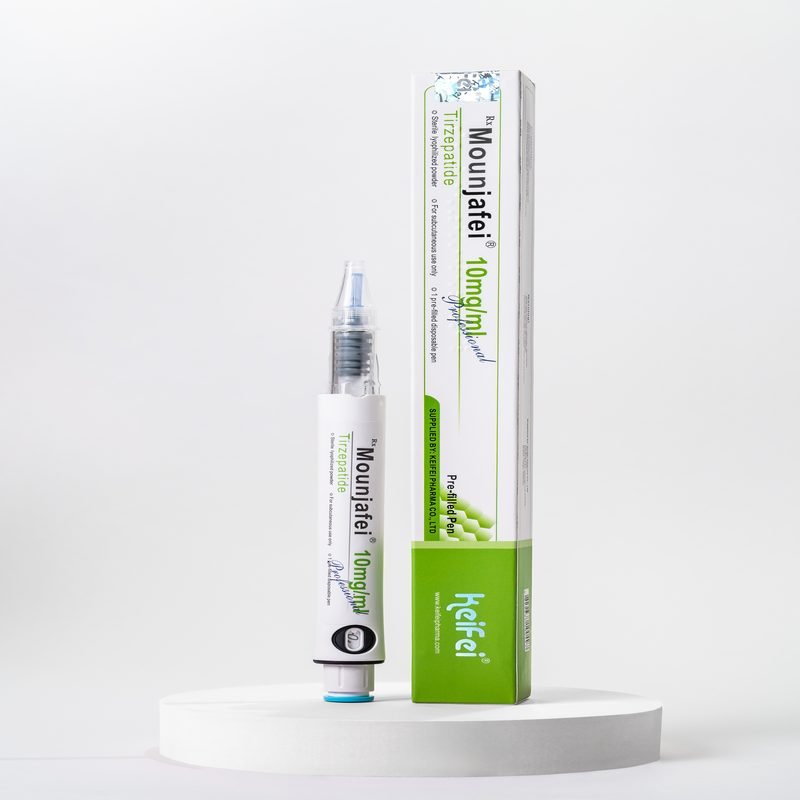
Tirzepatide (Mounjaro/Zepbound)
Tirzepatide is the gold standard among approved weight management compounds. It was the first dual GIP/GLP-1 agonist, and its SURMOUNT clinical program is the most comprehensive dataset available. The 15mg dose achieved -22.5% weight loss in SURMOUNT-1 (72 weeks, N=2,539), with 57% of participants achieving 20%+ loss. In the head-to-head SURMOUNT-5, it beat Semaglutide decisively: -20.2% vs -13.7%.
Mechanism: GLP-1 activation drives appetite suppression, glucose-dependent insulin secretion, and delayed gastric emptying. GIP activation synergistically amplifies weight loss, improves beta-cell function, and enhances lipid metabolism. The C20 fatty diacid moiety enables albumin binding for a ~5-day half-life.
Dosing: Start 2.5mg, titrate +2.5mg every 4 weeks. Three maintenance options (5mg, 10mg, 15mg) provide individualization. Side effects (nausea 12-18%, diarrhea 12-17%) are mostly during titration.
Pros
- FDA approved with extensive safety data
- 5 completed Phase 3 SURMOUNT trials
- 3 flexible maintenance doses
- Head-to-head superiority over Semaglutide
- Well-established titration protocol
Cons
- No energy expenditure mechanism
- Lower weight loss than Retatrutide
- Hair loss at 5.7% (15mg dose)
- Injection site reactions more common
- Weight regain on discontinuation (+14%)
#3 Semaglutide & CagriSema — The GLP-1 Pioneer
Semaglutide (Ozempic/Wegovy) & CagriSema
Semaglutide launched the modern obesity treatment revolution. As a GLP-1 monoagonist, it achieved -16.9% weight loss in STEP 1 (2.4mg, 68 weeks) — groundbreaking when published. Its cardiovascular outcomes trial (SELECT) demonstrated a 20% reduction in major adverse cardiovascular events, making it the first weight management drug with proven cardiovascular benefit. This remains a unique advantage that neither Tirzepatide nor Retatrutide has yet demonstrated.
CagriSema combines Semaglutide 2.4mg with Cagrilintide 2.4mg (amylin analog). In REDEFINE 1 (68 weeks), it achieved -20.4% weight loss with 60% of participants reaching 20%+ loss. This surpasses Semaglutide alone (-14.9%) by engaging the complementary amylin brainstem satiety pathway. Filed for FDA approval in 2025.
Mechanism: GLP-1 activation suppresses appetite via hypothalamic signaling, slows gastric emptying, enhances glucose-dependent insulin secretion, and suppresses glucagon. Cagrilintide adds amylin receptor activation in brainstem satiety centers (area postrema, NTS, LPBN) for complementary appetite suppression.
Pros
- Most clinical data of any weight loss peptide
- Proven cardiovascular benefit (SELECT)
- CagriSema boosts to ~20% weight loss
- Oral form available (Rybelsus)
- Extensive real-world safety track record
Cons
- Single maintenance dose (less flexible)
- Lower efficacy than dual/triple agonists
- More vomiting vs Tirzepatide (SURMOUNT-5)
- Higher discontinuation rate in head-to-head
- CagriSema has 79.6% GI event rate
#4 AOD-9604 — The Targeted Fat Burner
AOD-9604 (hGH Fragment 176-191)
AOD-9604 occupies a fundamentally different niche than incretin agonists. It is a modified 16-amino-acid fragment of human growth hormone (amino acids 176-191) engineered to isolate HGH's fat-burning properties while eliminating growth-promoting and diabetogenic effects. It targets beta-3 adrenergic receptors on fat cells, activating hormone-sensitive lipase to break down stored triglycerides while simultaneously inhibiting new fat formation (lipogenesis).
Clinical Data: Phase IIa demonstrated statistically significant fat loss in obese subjects over 12 weeks. Phase IIb showed 2.6 kg vs 0.8 kg placebo over 24 weeks but did not achieve statistical significance, leading to development termination in 2007. Across six RCTs (900+ participants), the safety profile was "indistinguishable from placebo."
Why It Ranks: AOD-9604 serves researchers who need a fat-specific compound without appetite modulation, hormonal perturbation, or metabolic side effects. It received Australian GRAS status and is being investigated for osteoarthritis. Its mechanism is narrower than GLP-1 agonists but cleaner — ideal for researchers studying adipocyte-specific lipolysis pathways.
Dosing: 300-500 mcg daily, subcutaneous injection, fasted state, 30-60 minutes before first meal. 12-24 week cycles.
Pros
- Excellent safety ("placebo-level")
- No hormonal disruption
- No appetite/mood/GI effects
- No IGF-1 elevation or glucose impact
- Targeted fat metabolism only
Cons
- Modest weight loss vs GLP-1 agonists
- Phase IIb failure led to abandonment
- Daily injection required
- Not FDA-approved
- Narrow mechanism (fat only)
#5 Cagrilintide — The Amylin Amplifier
Cagrilintide (Long-Acting Amylin Analog)
Cagrilintide is a long-acting analog of human amylin — a hormone co-secreted with insulin from pancreatic beta cells after meals. As a standalone compound, it produced -11.5% weight loss in REDEFINE 1 (68 weeks). Its true value lies in combination: paired with Semaglutide 2.4mg as CagriSema, it achieved -20.4% weight loss with 60% reaching 20%+ and 23% reaching 30%+ loss.
Mechanism: Cagrilintide activates amylin receptors (AMY1R and AMY3R) concentrated in brainstem satiety centers — the area postrema, nucleus of the solitary tract, and lateral parabrachial nucleus. This pathway is independent from and complementary to GLP-1 signaling. It acts on both homeostatic (hypothalamus) and hedonic (reward) appetite centers, providing dual appetite suppression through a fundamentally different neural circuit.
Clinical Data: REDEFINE 2 (obesity + T2D): CagriSema achieved -13.7% weight loss and 73.5% reached HbA1c <6.5%. GI side effects affected 79.6% of the CagriSema group vs 39.9% placebo, though most were mild-to-moderate and transient.
Pros
- Novel mechanism independent from GLP-1
- Excellent combination synergy
- CagriSema reaches ~20% weight loss
- Acts on hedonic + homeostatic appetite
- Once-weekly dosing
Cons
- Moderate standalone efficacy (11.5%)
- High GI event rate in CagriSema (79.6%)
- Not yet FDA-approved
- Best as combination, not monotherapy
- Limited independent data vs GLP-1 agonists
Master Comparison Table
| Compound | Max Weight Loss | Mechanism | FDA Status | Dosing |
|---|---|---|---|---|
| Retatrutide | 28.7% | Triple GLP-1/GIP/GCGR | Phase 3 | 12mg weekly |
| Tirzepatide | 22.5% | Dual GIP/GLP-1 | Approved | 5-15mg weekly |
| CagriSema | 20.4% | GLP-1 + Amylin | Filed 2025 | Combo weekly |
| Semaglutide | 16.9% | GLP-1 only | Approved | 2.4mg weekly |
| AOD-9604 | ~2-5% | HGH fragment/lipolysis | Research only | 300-500mcg daily |
| Cagrilintide | 11.5% | Amylin analog | Phase 3 | 2.4mg weekly |
How to Choose: Decision Framework
Selecting the right weight management peptide depends on your research objectives, protocol requirements, and risk tolerance:
- Maximum efficacy research: Retatrutide 12mg — highest weight loss, triple mechanism, emerging Phase 3 data
- Gold-standard with complete data: Tirzepatide 15mg — FDA-approved, five Phase 3 trials, proven head-to-head superiority over Semaglutide
- Cardiovascular focus: Semaglutide 2.4mg — the only weight management peptide with proven CV outcome benefit (SELECT trial)
- Combination/synergy research: CagriSema or Cagrilintide — novel amylin pathway, complementary to GLP-1
- Fat-specific, minimal side effects: AOD-9604 — targeted lipolysis, placebo-level safety, no hormonal disruption
- Metabolic liver disease: Retatrutide — glucagon receptor activation specifically targets hepatic steatosis
The Future: What to Watch in 2026-2027
The weight management peptide landscape continues to evolve rapidly. Key developments to monitor include:
- Retatrutide TRIUMPH results: TRIUMPH-1 (primary obesity) and TRIUMPH-2 (T2D) will establish definitive Phase 3 efficacy numbers
- CagriSema FDA decision: If approved, it would be the first injectable GLP-1 + amylin combination treatment
- Oral formulations: Oral Semaglutide is available; oral Tirzepatide and other incretins are in development
- Quad agonists: Early-stage research into compounds targeting four or more receptor pathways simultaneously
- Muscle-sparing compounds: Addressing the lean mass preservation concern with current GLP-1 agonists