Detailed Mechanism of Action
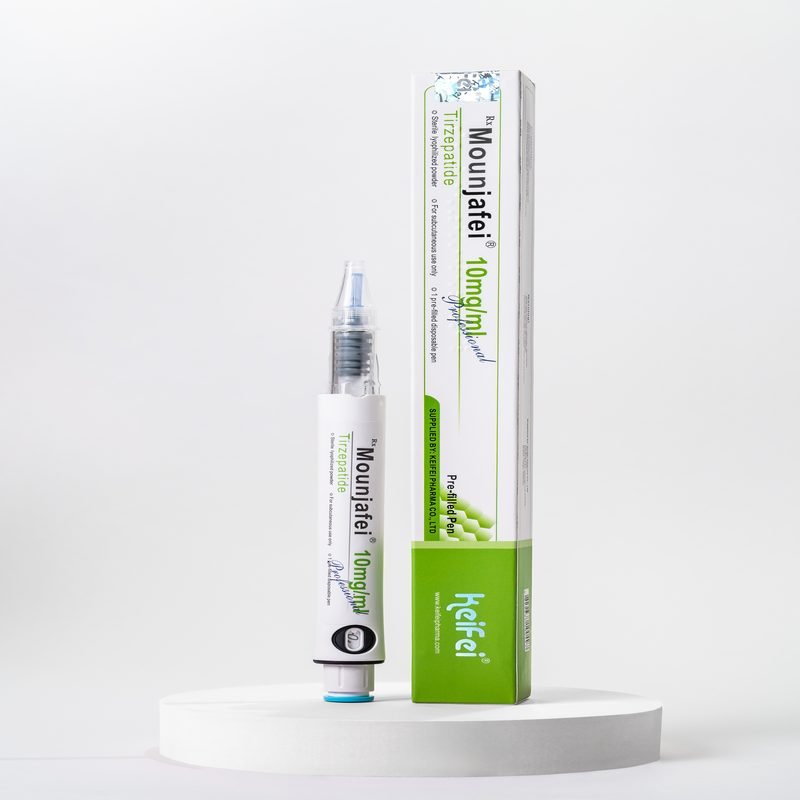
Mounjafei is a pre-filled pen containing Tirzepatide — the first-in-class dual GLP-1/GIP receptor agonist at a concentration of 10mg/ml. The ready-to-use pen format eliminates the need for reconstitution, vial handling, and dose calculation, making it the most convenient format available for tirzepatide administration. The active compound targets two key incretin receptor systems simultaneously, creating a synergistic metabolic effect that has been clinically proven superior to GLP-1 monoagonists.
At the GLP-1 receptor, tirzepatide enhances glucose-dependent insulin secretion, suppresses glucagon release, delays gastric emptying, and reduces appetite via direct hypothalamic signaling. The GIP (glucose-dependent insulinotropic polypeptide) receptor component amplifies weight reduction beyond what GLP-1 agonism alone achieves — preclinical studies demonstrated that the combined GIP/GLP-1 activation produces greater weight loss than GLP-1 receptor stimulation in isolation. GIP activation also improves beta-cell function, enhances lipid metabolism, and contributes to central appetite suppression through complementary neural pathways distinct from GLP-1 signaling.
The molecule incorporates a C20 fatty diacid moiety that binds to albumin in the bloodstream, extending the half-life to approximately 5 days and enabling the once-weekly dosing schedule that makes tirzepatide practical for long-term use. The pre-filled pen format maintains compound stability through pharmaceutical-grade manufacturing controls, eliminating the reconstitution step that can introduce variability and contamination risk in lyophilized vial protocols.
Clinical Evidence
Tirzepatide's clinical evidence base comes from the comprehensive SURMOUNT trial program. SURMOUNT-1 (New England Journal of Medicine, 2022, N=2,539) demonstrated dramatic results in adults with obesity over 72 weeks: 22.5% body weight loss at the 15mg dose, 21.4% at 10mg, and 16.0% at 5mg, versus 3.1% for placebo. At the highest dose, 91% of participants lost at least 5% of body weight and 57% lost 20% or more — numbers that approach the efficacy of bariatric surgery.
The definitive head-to-head comparison came in SURMOUNT-5 (NEJM, 2025), where tirzepatide was tested directly against semaglutide 2.4mg over 72 weeks. Tirzepatide achieved 20.2% weight loss compared to semaglutide's 13.7% — representing 47% greater relative weight reduction (P<0.001). Fewer tirzepatide patients discontinued treatment, and the semaglutide group experienced more vomiting. SURMOUNT-4 (88 weeks total) demonstrated that patients who stopped tirzepatide after achieving 20.9% weight loss regained 14% of body weight, while those continuing lost an additional 5.5%, establishing the need for ongoing therapy.
Additional SURMOUNT trials confirmed efficacy across diverse populations: SURMOUNT-2 in patients with both obesity and type 2 diabetes, and SURMOUNT-3 in patients who had already undergone 12 weeks of intensive lifestyle intervention. The consistency of results across these varied settings provides robust evidence that tirzepatide's dual mechanism delivers clinically meaningful weight reduction regardless of baseline metabolic status or prior intervention history.
Dosing Protocol
The Mounjafei pre-filled pen eliminates reconstitution entirely — no mixing, no vials, no bacteriostatic water, no dose calculations. The pen contains tirzepatide at 10mg/ml concentration, ready for immediate subcutaneous injection. This is the primary advantage of the pen format: reduced preparation complexity, lower contamination risk, and consistent dose delivery without the variability that can occur with manual reconstitution from lyophilized vials.
Tirzepatide dosing follows a structured titration with three maintenance options: start at 2.5mg weekly for 4 weeks, increase to 5mg (first maintenance option), then continue titrating through 7.5mg (week 8), 10mg (second maintenance option, week 12), 12.5mg (week 16), and 15mg (maximum maintenance, week 20) as needed. Each step is held for four weeks to minimize GI side effects. The three maintenance dose options (5mg, 10mg, 15mg) allow individualized optimization — a key advantage over semaglutide's single 2.4mg maintenance dose.
Administer the weekly injection subcutaneously in the abdomen (at least 5cm from navel), outer thigh, or upper arm. Inject on the same day each week for consistent plasma levels. Rotate injection sites systematically. The pen format ensures precise dose delivery without the rounding errors possible with insulin syringes. Store the pen refrigerated at 2-8°C, protected from direct light. For research purposes only — all dosing protocols require supervision by qualified medical professionals.
Side Effects & Safety
The side effect profile for the Mounjafei pen is identical to tirzepatide in vial format, as the active compound is the same. Gastrointestinal side effects are the most commonly reported: nausea (12-18%), diarrhea (12-17%), constipation (6-11%), and vomiting (5-9%). These effects occur primarily during the dose titration phase and generally diminish once a stable maintenance dose is reached. The gradual titration schedule (increasing every 4 weeks) is specifically designed to minimize the severity and duration of GI symptoms.
Less common side effects include injection site reactions (erythema, pain), hair loss (5.7% at the 15mg dose in SURMOUNT trials), fatigue, decreased appetite (both a therapeutic effect and reported side effect), dyspepsia, and gastroesophageal reflux. In SURMOUNT-5, tirzepatide showed more injection site reactions but fewer vomiting episodes and fewer treatment discontinuations compared to semaglutide, suggesting a generally favorable tolerability profile relative to the most widely used GLP-1 agonist.
Rare but serious potential adverse events include pancreatitis (report severe persistent abdominal pain immediately), gallbladder events, and hypoglycemia when used with insulin or sulfonylureas. The compound carries the class-wide boxed warning for thyroid C-cell tumors from rodent studies. Contraindicated in individuals with personal or family history of medullary thyroid carcinoma (MTC), MEN 2 syndrome, known hypersensitivity, and during pregnancy (discontinue at least 2 months before planned pregnancy). Severe gastrointestinal disease is a relative contraindication. This product is for research purposes only.
Storage & Reconstitution
The Mounjafei pre-filled pen requires no reconstitution — this is one of its primary advantages. The pen arrives ready to use, eliminating the need for bacteriostatic water, reconstitution syringes, dose calculations, and the sterile technique required for vial preparation. Simply remove the pen from refrigeration, allow it to reach room temperature for 2-3 minutes (do not warm by other methods), and administer the injection.
Store the pen refrigerated at 2-8°C (36-46°F), protected from direct light. Do not freeze the pen — unlike lyophilized vials that can tolerate freezing, the liquid formulation in the pen may be damaged by freeze-thaw cycles. Keep the pen in its original packaging until ready for use. After first use, the pen may be stored at room temperature (up to 30°C) for a limited period as specified on the packaging, though refrigeration is always preferred in the UAE climate.
In the UAE, where summer temperatures regularly exceed 45°C, the pen format offers a practical advantage: the sealed pharmaceutical packaging provides better temperature stability during brief handling than an open reconstituted vial. However, prolonged heat exposure will still degrade the peptide. Never leave the pen in a vehicle, near windows with direct sunlight, or outside refrigeration for extended periods. Use insulated bags with cold packs for any transport. For international deliveries, cold-chain shipping is essential, and temperature indicator packaging should be requested during summer months. Verify the integrity of the delivery packaging upon receipt.
Frequently Asked Questions
What is the Mounjafei Pen?
Mounjafei is a pre-filled pen containing Tirzepatide at 10mg/ml — the same dual GLP-1/GIP agonist available in lyophilized vial form, but in a convenient ready-to-use format. No reconstitution, no vials, no dose calculations. Just inject weekly subcutaneously. The pen provides consistent, precise dosing with lower contamination risk than manual reconstitution.
How does it compare to Tirzepatide vials?
Same active compound, same clinical evidence, same efficacy. The difference is convenience: the pen eliminates reconstitution, reduces preparation time, ensures consistent dosing, and lowers contamination risk. Vials offer more flexibility for custom dose titration and are more cost-effective for larger quantities. The pen is ideal for subjects who prioritize simplicity.
What are the common side effects?
Nausea (12-18%), diarrhea (12-17%), constipation (6-11%), vomiting (5-9%) — primarily during dose titration. These generally diminish with continued use. Hair loss (5.7% at 15mg), injection site reactions, and fatigue are less common. In SURMOUNT-5, tirzepatide showed fewer discontinuations than semaglutide.
What clinical results has Tirzepatide achieved?
SURMOUNT-1: up to 22.5% weight loss at 15mg (72 weeks). SURMOUNT-5: 47% greater weight loss than semaglutide in head-to-head comparison (20.2% vs 13.7%). Three maintenance dose options (5mg, 10mg, 15mg) allow individualized optimization.
How should the Mounjafei Pen be stored?
Refrigerate at 2-8°C, protected from light. Do not freeze. No reconstitution needed. In the UAE, maintain cold chain integrity during transport and avoid leaving the pen in vehicles or direct sunlight. The sealed pen format provides slightly better handling stability than open reconstituted vials.
Disclaimer: This product is sold for laboratory research purposes only. Not for human consumption. All information provided is for educational purposes and does not constitute medical advice. Consult a qualified healthcare provider before starting any peptide protocol.