The GLP-1 Revolution: Two Compounds, One Question
The incretin-based weight management revolution has produced two dominant compounds: Tirzepatide (branded as Mounjaro/Zepbound) and Semaglutide (branded as Ozempic/Wegovy). Both are once-weekly injectable peptides that have reshaped obesity research, but they work through fundamentally different mechanisms. Researchers across the UAE and globally need to understand these differences to select the optimal compound for their specific protocols.
This guide delivers a comprehensive, data-driven comparison using published clinical trial results, including the landmark SURMOUNT-5 head-to-head study published in the New England Journal of Medicine in 2025.
Mechanism of Action: Dual vs Single Agonism
Tirzepatide — Dual GIP/GLP-1 Receptor Agonist
Tirzepatide is engineered from the native GIP (glucose-dependent insulinotropic polypeptide) sequence. It is the first-in-class dual GIP/GLP-1 receptor agonist, containing a C20 fatty diacid moiety that enables albumin binding, extending its half-life to approximately 5 days. By simultaneously activating both the GIP receptor and the GLP-1 receptor, Tirzepatide creates a synergistic effect that surpasses what either pathway can achieve alone.
- GLP-1 Receptor: Enhances glucose-dependent insulin secretion, suppresses glucagon, slows gastric emptying, reduces appetite via hypothalamic signaling
- GIP Receptor: Synergistically amplifies weight reduction, improves beta-cell function, enhances lipid metabolism, contributes to central appetite suppression
The GIP pathway is the critical differentiator. Preclinical mouse models have demonstrated that dual GIP/GLP-1 activation produces significantly greater weight reduction than GLP-1 monoagonism alone, providing the mechanistic foundation for Tirzepatide's superior clinical results.
Semaglutide — GLP-1 Receptor Agonist Only
Semaglutide is a modified GLP-1 analog with 94% structural homology to native human GLP-1. It features a fatty acid chain modification that enables albumin binding and extends its half-life for once-weekly dosing. As a selective GLP-1 receptor agonist, it works through a single incretin pathway — appetite suppression, delayed gastric emptying, and improved glucose homeostasis — without engaging the GIP receptor.
While Semaglutide was the first incretin to demonstrate >15% weight loss in obesity trials and remains highly effective, it relies on a single receptor pathway, which inherently limits its ceiling compared to multi-receptor agonists.
Head-to-Head Clinical Data: SURMOUNT-5
SURMOUNT-5 Key Results (72 weeks, NEJM 2025)
Tirzepatide: -20.2% body weight vs Semaglutide: -13.7% body weight
Tirzepatide delivered 47% greater relative weight loss (P<0.001). More Semaglutide patients discontinued due to side effects. Published: DOI 10.1056/NEJMoa2416394
The SURMOUNT-5 trial was the first randomized, double-blind, head-to-head comparison of Tirzepatide versus Semaglutide at their maximum approved obesity doses. This is the gold-standard evidence because it eliminates the confounding variables that plague cross-trial comparisons (different patient populations, different endpoints, different durations).
Key findings from the study included: more participants in the Semaglutide arm experienced vomiting, while injection site reactions were more common with Tirzepatide. Critically, the discontinuation rate due to adverse events was higher in the Semaglutide group, suggesting that despite similar overall GI profiles, Tirzepatide may be better tolerated at its efficacy-maximizing dose.
Side-by-Side Comparison Table
| Parameter | Tirzepatide (Zepbound) | Semaglutide (Wegovy) |
|---|---|---|
| Mechanism | Dual GIP/GLP-1 agonist | GLP-1 agonist only |
| Max Weight Loss (Trial) | 22.5% at 15mg (SURMOUNT-1) | 16.9% at 2.4mg (STEP 1) |
| Head-to-Head Result | -20.2% at 72 weeks | -13.7% at 72 weeks |
| Maintenance Dose Options | 3 options (5mg, 10mg, 15mg) | 1 option (2.4mg) |
| Dosing Frequency | Once weekly (SC) | Once weekly (SC) |
| Titration Schedule | 2.5mg start, +2.5mg/4 weeks | 0.25mg start, stepwise |
| GI Side Effects | Nausea 12-18%, diarrhea 12-17% | Nausea ~20%, diarrhea ~10% |
| Vomiting | 5-9% | Higher incidence |
| Injection Site Reactions | More common | Less common |
| Discontinuation (Side Effects) | Lower rate | Higher rate |
| Diabetes Brand | Mounjaro | Ozempic |
| Obesity Brand | Zepbound | Wegovy |
| Hair Loss | 5.7% at 15mg | ~3% |
| Aura Price (UAE) | From AED 600 (20mg vial) | N/A |
Clinical Trial Programs Compared
Tirzepatide: SURMOUNT Program
The SURMOUNT clinical program is the most comprehensive weight management trial program ever conducted for a dual agonist. It spans five major Phase 3 trials:
- SURMOUNT-1 (N=2,539, 72 weeks): Obesity without T2D. 15mg achieved -22.5%, with 57% achieving 20%+ weight loss. 91% achieved at least 5% loss.
- SURMOUNT-2: Obesity with T2D. Significant weight loss and glycemic improvement at both 10mg and 15mg.
- SURMOUNT-3: Post-intensive lifestyle intervention. Tirzepatide added significant additional weight loss beyond lifestyle changes alone.
- SURMOUNT-4 (88 weeks total): Weight maintenance study. Continuation group lost an additional -5.5%, while placebo-switch group regained +14%, proving the need for continued therapy.
- SURMOUNT-5: Direct head-to-head vs Semaglutide. Tirzepatide won decisively: -20.2% vs -13.7%.
Semaglutide: STEP Program
The STEP program established Semaglutide as the first incretin to demonstrate transformative weight loss. Key results include:
- STEP 1 (N=1,961, 68 weeks): -16.9% at 2.4mg in obesity without T2D.
- STEP 2: Obesity with T2D. -9.6% weight loss.
- STEP 3: Combined with intensive behavioral therapy. -16.0%.
- SELECT: Cardiovascular outcomes trial showed 20% reduction in major cardiovascular events — the first weight management drug to demonstrate cardiovascular benefit.
Dosing Flexibility: A Key Advantage
Tirzepatide offers three maintenance dose options (5mg, 10mg, 15mg), allowing researchers and clinicians to individualize treatment based on response and tolerability. This is a meaningful advantage over Semaglutide, which has a single 2.4mg maintenance dose for obesity. If a subject tolerates 10mg well and achieves adequate response, there is no clinical need to escalate to 15mg — this flexibility reduces unnecessary side effect exposure.
Tirzepatide's titration protocol starts at 2.5mg, increasing by 2.5mg every 4 weeks: 2.5mg, 5mg, 7.5mg, 10mg, 12.5mg, 15mg. The gradual escalation with multiple stopping points reduces GI side effect severity during the dose-finding phase.
Cost Comparison in the UAE Research Market
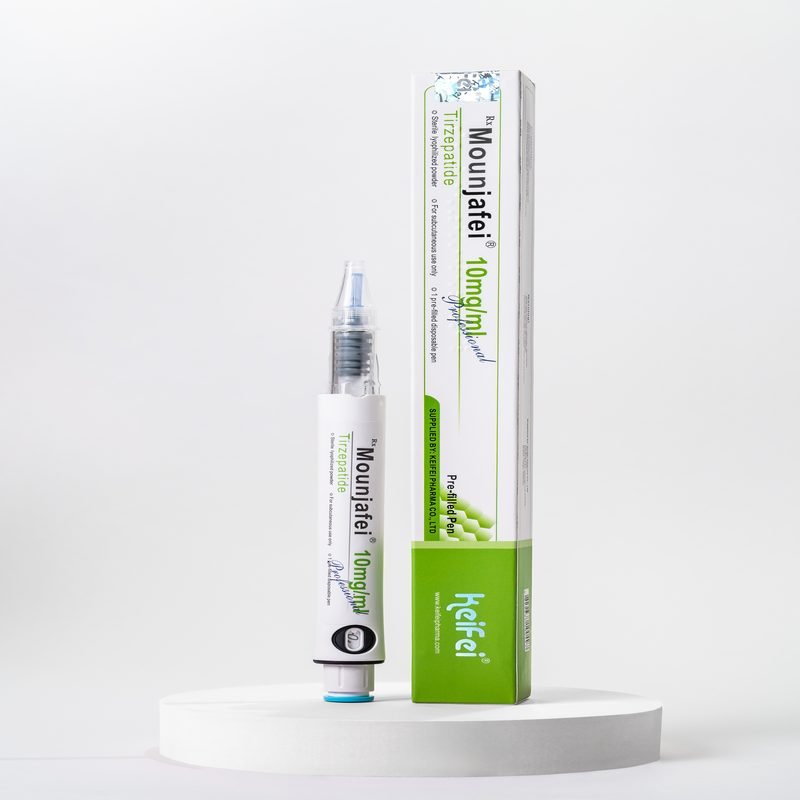
In the branded pharmaceutical market, both compounds carry premium pricing. However, in the research peptide market, Tirzepatide is available at significantly lower cost than branded alternatives. Aura Peptides offers research-grade Tirzepatide starting at AED 600 for 20mg vials, and the pre-filled Mounjafei pen at AED 900. Semaglutide (branded Ozempic/Wegovy) remains available only through pharmaceutical channels in the UAE at substantially higher cost.
For researchers conducting preclinical or in-vitro studies, the accessibility of research-grade Tirzepatide represents a significant advantage in terms of both cost and compound availability.
Side Effect Profiles: Detailed Breakdown
Both compounds share a similar gastrointestinal side effect profile, which is expected given their shared GLP-1 receptor activation. These effects are dose-dependent, most common during titration, and generally mild-to-moderate in severity.
Tirzepatide side effects: Nausea (12-18%), diarrhea (12-17%), constipation (6-11%), vomiting (5-9%), decreased appetite, dyspepsia, abdominal pain. Less common: injection site reactions (erythema, pain), hair loss (5.7% at 15mg), fatigue, GERD. Rare: pancreatitis, gallbladder events, hypoglycemia (with sulfonylureas/insulin).
Semaglutide side effects: Nausea (~20%), diarrhea (~10%), vomiting (higher incidence than Tirzepatide), constipation, abdominal pain. Less common: fatigue, dizziness, hair thinning. Rare: pancreatitis, gallbladder events, thyroid C-cell tumors (rodent studies).
Both carry a boxed warning regarding thyroid C-cell tumors based on rodent studies. Both are contraindicated in patients with personal or family history of medullary thyroid carcinoma (MTC) or Multiple Endocrine Neoplasia syndrome type 2 (MEN 2).
The Verdict: Which Compound Wins?
Research Conclusion
Based on the SURMOUNT-5 head-to-head data and the complete clinical evidence, Tirzepatide is the superior compound for weight management research. It delivers 47% greater weight loss, offers more dosing flexibility, has a comparable (arguably better) tolerability profile, and is more accessible in the UAE research market. Semaglutide remains a highly effective compound — particularly notable for its proven cardiovascular benefit in the SELECT trial — but for pure weight management efficacy, Tirzepatide sets the current standard.