The Next Evolution: From Dual to Triple Agonism
The incretin-based weight management field is evolving rapidly. Tirzepatide, the dual GIP/GLP-1 agonist, redefined what was possible by achieving 22.5% weight loss in the SURMOUNT program. Now, Retatrutide (LY3437943) — the first-in-class triple GLP-1/GIP/Glucagon receptor agonist — has pushed the boundary even further, recording 28.7% weight loss in Phase 3 data. This guide provides a comprehensive, evidence-based comparison of these two Eli Lilly compounds that represent the current and future frontier of obesity research.
Mechanism of Action: Two Receptors vs Three
Tirzepatide — Dual GIP/GLP-1 Agonist
Tirzepatide activates two incretin receptors simultaneously. The GLP-1 receptor drives appetite suppression, glucose-dependent insulin secretion, and delayed gastric emptying. The GIP receptor amplifies weight loss synergistically, improves beta-cell function, and enhances lipid metabolism. This dual mechanism produces significantly greater weight loss than GLP-1 monoagonism alone, as demonstrated in the SURMOUNT-5 head-to-head trial against Semaglutide.
What Tirzepatide lacks is an energy expenditure mechanism. It reduces caloric intake through appetite suppression and metabolic efficiency but does not directly increase the rate at which the body burns stored fat.
Retatrutide — Triple GLP-1/GIP/Glucagon Agonist
Retatrutide adds a third, fundamentally different mechanism: glucagon receptor activation. This is the revolutionary component. Glucagon increases energy expenditure through hepatic lipid oxidation, enhances thermogenesis (heat production from fat burning), promotes lipolysis (fat breakdown), and reduces hepatic steatosis (liver fat).
This creates a three-pronged approach to weight management:
- GLP-1: Reduced food intake via appetite suppression and delayed gastric emptying
- GIP: Enhanced metabolic efficiency, synergistic weight loss amplification
- Glucagon: Increased energy expenditure, fat burning, liver fat reduction
The glucagon component is what makes Retatrutide genuinely "next-generation" — it does not merely reduce how much energy goes in, it also increases how much energy goes out. No other approved or late-stage compound offers this three-dimensional approach.
Clinical Data Comparison
The Numbers That Matter
Retatrutide Phase 2: -24.2% at 12mg (48 weeks) | TRIUMPH-4 Phase 3: -28.7% at 12mg (68 weeks)
Tirzepatide SURMOUNT-1: -22.5% at 15mg (72 weeks) | SURMOUNT-5: -20.2% at max dose (72 weeks)
Retatrutide — Phase 2 Trial (NEJM 2023)
The Phase 2 obesity trial (N=338, 48 weeks) tested multiple dose levels with impressive dose-dependent results:
- 1mg: -7.2% at 24 weeks
- 4mg: -12.9% at 24 weeks
- 8mg: -17.3% at 24 weeks
- 12mg: -17.5% at 24 weeks, -24.2% at 48 weeks
- Placebo: -2.1% at 48 weeks
Notably, the weight loss curve at 48 weeks had not plateaued at the highest dose, suggesting that longer treatment could yield even greater reductions — a prediction confirmed by the Phase 3 data.
Retatrutide — TRIUMPH-4 Phase 3 (First Reported Phase 3)
TRIUMPH-4 evaluated Retatrutide 12mg in patients with obesity and knee osteoarthritis over 68 weeks. The results were unprecedented:
- -28.7% body weight loss (average 71.2 lbs / 32.3 kg)
- WOMAC pain scores reduced by up to 75.8% (4.5 points)
- More than 1 in 8 patients were completely free from knee pain
- Significant improvements in physical function measures
This 28.7% figure represents the highest weight loss ever recorded in a Phase 3 obesity drug trial, surpassing Tirzepatide's 22.5% (SURMOUNT-1) and Semaglutide's 16.9% (STEP 1).
Additional TRIUMPH Trials (2026)
Multiple Phase 3 TRIUMPH trials are reporting or expected to report in 2026:
- TRIUMPH-1: Primary obesity (weight management)
- TRIUMPH-2: Obesity with type 2 diabetes
- TRIUMPH-3: Obesity with obstructive sleep apnea
- TRIUMPH-5: Chronic low back pain
- TRIUMPH-6: MASLD/NASH (liver disease)
- Cardiovascular outcomes trial
Tirzepatide — SURMOUNT Program
Tirzepatide's SURMOUNT program is the most complete Phase 3 dataset for any dual agonist. Key efficacy results:
- SURMOUNT-1: -22.5% at 15mg (72 weeks), 57% achieved 20%+ loss
- SURMOUNT-4: -20.9% in open-label phase; +14% regain upon switching to placebo
- SURMOUNT-5: -20.2% vs Semaglutide's -13.7% in head-to-head comparison
Side-by-Side Comparison Table
| Parameter | Retatrutide | Tirzepatide |
|---|---|---|
| Mechanism | Triple GLP-1/GIP/Glucagon | Dual GIP/GLP-1 |
| Max Weight Loss | 28.7% (TRIUMPH-4, 68 weeks) | 22.5% (SURMOUNT-1, 72 weeks) |
| Phase 2 Best | 24.2% at 12mg (48 weeks) | N/A (direct to Phase 3) |
| Energy Expenditure | Yes (glucagon-driven thermogenesis) | No direct effect |
| Liver Fat Reduction | Significant (Phase 2a MASLD data) | Limited data |
| Joint Pain Benefit | 75.8% WOMAC reduction | Not specifically studied |
| FDA Status | Phase 3 trials (2026-2027 approval expected) | FDA approved (Mounjaro/Zepbound) |
| Phase 3 Data Volume | TRIUMPH-4 reported; others pending | 5 completed SURMOUNT trials |
| Long-term Safety Data | Limited (Phase 2 + early Phase 3) | Extensive (multi-year Phase 3) |
| Dosing | 2mg start, titrate to 12mg weekly | 2.5mg start, titrate to 15mg weekly |
| GI Side Effects | Nausea most common, dose-dependent | Nausea 12-18%, diarrhea 12-17% |
| T2D Efficacy | -16.9% weight, -2.2% HbA1c (Phase 2) | Significant (SURMOUNT-2) |
| Aura Price (UAE) | From AED 1,000 (20mg) | From AED 600 (20mg) |
The Glucagon Advantage: Why Triple Matters
The addition of glucagon receptor activation fundamentally changes the weight management equation. Traditional GLP-1 and GIP agonism work primarily on the "calories in" side — they reduce appetite, slow gastric emptying, and improve metabolic signaling. Glucagon adds the "calories out" dimension:
- Hepatic lipid oxidation: Glucagon directly stimulates the liver to burn stored fat for energy, particularly effective at reducing dangerous visceral and hepatic fat deposits
- Thermogenesis: Increased heat production from fat metabolism, effectively turning stored energy into thermal output
- Lipolysis promotion: Enhanced breakdown of triglycerides in adipose tissue, mobilizing fatty acids for oxidation
- MASLD/NASH potential: The liver-fat-reducing effect positions Retatrutide as a potential treatment for metabolic-associated steatotic liver disease, a condition affecting an estimated 30% of the global population
This is not incremental improvement — it is a mechanistic expansion. Retatrutide does not simply do what Tirzepatide does a little better; it does what Tirzepatide does AND adds an entirely new physiological pathway. The clinical results reflect this: the jump from 22.5% to 28.7% weight loss represents a 28% relative improvement over the previous best-in-class.
Approval Status and Availability
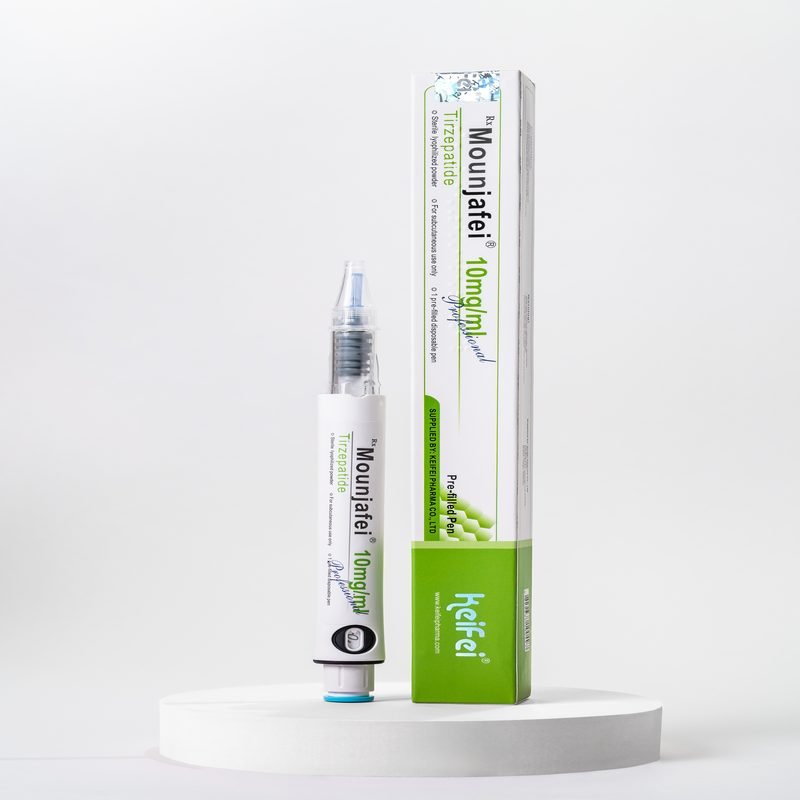
Tirzepatide is FDA-approved as Mounjaro (for type 2 diabetes) and Zepbound (for chronic weight management). It has years of real-world safety data and a complete Phase 3 program spanning five major trials. It is available as a research compound through suppliers like Aura Peptides, as well as through pharmaceutical channels.
Retatrutide is in Phase 3 clinical trials. Eli Lilly is expected to file for FDA approval in late 2025 or early 2026, with potential approval in the 2026-2027 timeframe. For researchers, research-grade Retatrutide is available now through Aura Peptides in 20mg and 40mg vials.
Which Should Researchers Choose?
Research Recommendation
For maximum efficacy research: Retatrutide offers the highest weight loss magnitude of any compound studied in Phase 3, plus unique liver fat reduction and energy expenditure mechanisms. It is the frontier compound for researchers pushing the boundaries of what is possible in metabolic research.
For established protocols: Tirzepatide has the most complete clinical dataset, FDA approval, proven long-term safety, and more dosing flexibility. It is the gold standard for researchers who need extensive published literature to support their work.
Both compounds are available through Aura Peptides UAE with HPLC verification and COD delivery across all Emirates.