The Science of Peptide-Based Anti-Aging
Aging is driven by several interconnected molecular mechanisms: telomere shortening, mitochondrial dysfunction, NAD+ depletion, immune senescence, and accumulated cellular damage. Anti-aging peptides target these specific mechanisms at the molecular level. Unlike broad-spectrum supplements, each peptide addresses a defined pathway with documented research evidence. This precision approach allows researchers to target specific aging mechanisms and measure objective biomarkers of change.
Epithalon — Telomerase Activation
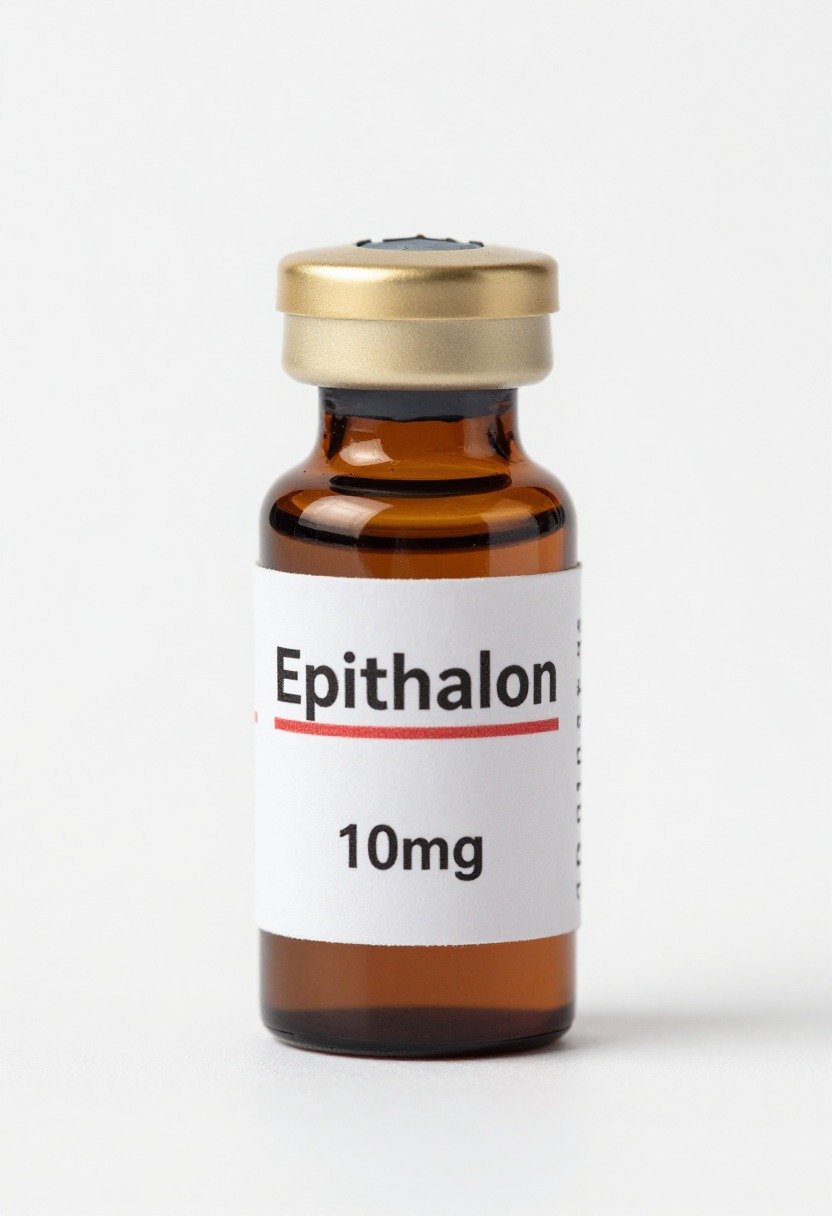
Epithalon (Ala-Glu-Asp-Gly) is a synthetic tetrapeptide that activates telomerase, the enzyme responsible for maintaining telomere length. Telomeres — protective caps on chromosome ends — shorten with each cell division, eventually triggering cellular senescence. Research by Professor Vladimir Khavinson demonstrated that Epithalon increased telomerase activity in human somatic cells by 2.4-fold. A 15-year human study showed statistically significant reductions in cardiovascular mortality in the Epithalon-treated group.
NAD+ — Cellular Energy Restoration
NAD+ (Nicotinamide Adenine Dinucleotide) levels decline approximately 50% between ages 40-60. This decline impairs over 500 enzymatic reactions including ATP energy production, DNA repair via PARP enzymes, and sirtuin activation. Restoring NAD+ levels through supplementation has been shown to improve mitochondrial function, enhance DNA repair capacity, and activate SIRT1-7 — the longevity-associated sirtuin proteins. Research by David Sinclair at Harvard has positioned NAD+ as central to the biology of aging.
MOTS-c — The Exercise Mimetic
MOTS-c is unique among anti-aging peptides as a mitochondrial-derived peptide that activates AMPK — the same energy-sensing pathway activated by exercise. Research published in Cell Metabolism showed MOTS-c improved insulin sensitivity and prevented age-dependent obesity in mice. It enhances mitochondrial biogenesis, promotes fat oxidation, and may protect against age-related metabolic decline. It essentially signals cells to behave as if the organism is exercising.
Thymosin Alpha-1 — Immune Rejuvenation
The thymus gland — responsible for T-cell maturation — atrophies with age, leading to immune senescence. Thymosin Alpha-1 compensates for this by promoting T-cell differentiation, enhancing dendritic cell function, and modulating inflammatory responses. Approved in 35+ countries, it has the most extensive clinical safety data of any immune-modulating peptide. It is particularly relevant for age-related immune decline and as an adjunct to vaccination in elderly populations.