Detailed Mechanism of Action
Melanotan-2 (MT-2) is a synthetic cyclic analog of alpha-melanocyte-stimulating hormone (alpha-MSH), engineered with enhanced metabolic stability and receptor binding affinity compared to the native hormone. It functions as a non-selective melanocortin receptor agonist, binding to the full spectrum of melanocortin receptors from MC1R through MC5R. This broad receptor profile is responsible for both its primary tanning effects and its range of secondary biological activities including appetite suppression and libido enhancement.
The tanning mechanism begins with MC1R activation on melanocytes — the specialized pigment-producing cells in the skin. When Melanotan-2 binds MC1R, it triggers Gs-protein coupling that elevates intracellular cyclic AMP (cAMP). This rise in cAMP activates the CREB transcription factor, which in turn upregulates MITF (microphthalmia-associated transcription factor) — the master regulator of melanocyte biology. MITF increases the expression of three critical melanogenic enzymes: tyrosinase, TRP-1, and TRP-2. The net result is a dramatic increase in eumelanin synthesis — the brown/black protective pigment responsible for tanning and UV photoprotection.
Importantly, Melanotan-2 can induce meaningful skin pigmentation with substantially less UV exposure than natural tanning requires. This is because the compound directly upregulates the melanin production machinery at the enzymatic level, rather than relying solely on UV-triggered DNA damage to initiate the tanning cascade. Additionally, Melanotan-2's non-selective binding to MC3R and MC4R in the brain produces appetite suppression (useful for weight management) and sexual arousal effects — the MC4R activity is the basis for PT-141 (bremelanotide), a derivative of MT-2 that was FDA-approved for hypoactive sexual desire disorder.
Clinical Evidence
Melanotan-2's melanogenic effects have been well-documented in both preclinical and clinical settings. Studies have consistently demonstrated dose-dependent increases in skin pigmentation following subcutaneous administration, with visible darkening typically appearing within 5-7 doses. The pigmentation response varies by Fitzpatrick skin type: individuals with fairer skin (Types I-II) require longer loading phases (3-4 weeks, cumulative dose 20-50mg) while those with olive or darker baseline pigmentation (Types IV-V) respond within 1-2 weeks with less total compound needed (under 10mg total).
The compound's bioavailability differs significantly by administration route. Subcutaneous injection provides approximately 100% bioavailability and is the preferred research route. Nasal spray formulations achieve only 30-40% bioavailability, requiring 2-3 times the dose for equivalent effects and producing results 10-21 days slower than the injectable route. This pharmacokinetic difference is a critical consideration for research protocol design and cost efficiency. Subcutaneous administration is significantly more reliable and cost-effective for achieving consistent pigmentation results.
The sexual function effects of MC4R activation led directly to the development of PT-141 (bremelanotide), which received FDA approval in 2019 for hypoactive sexual desire disorder in premenopausal women — validating the melanocortin receptor pathway as a legitimate pharmaceutical target. However, Melanotan-2 itself has not undergone formal regulatory approval for any indication. Safety concerns include reports of at least 5 cases of melanoma diagnosis during or after MT-2 use. While causality has not been established (correlation versus causation remains debated), this has prompted health authorities worldwide to issue safety warnings and underscores the importance of dermatological monitoring.
Dosing Protocol
Melanotan-2 dosing follows a two-phase approach: a loading phase to establish pigmentation and a maintenance phase to sustain it. During the loading phase, start with a low test dose of 100-250 mcg to assess nausea tolerance, as GI sensitivity is the most common barrier to comfortable dosing. The standard loading dose is 250-500 mcg administered daily via subcutaneous injection for 2-3 weeks, with some protocols using up to 500-1000 mcg daily for faster results (though with proportionally more side effects).
The loading phase should be combined with some controlled UV exposure — either brief natural sun exposure or tanning bed sessions — to activate the melanin production pathway that MT-2 has primed. Visible results typically appear within 5 doses, with the full loading phase running 6-8 weeks total for comprehensive pigmentation development. After the desired pigmentation level is achieved, transition to the maintenance phase: 500-1000 mcg administered 1-2 times per week, with occasional UV exposure to sustain the tan.
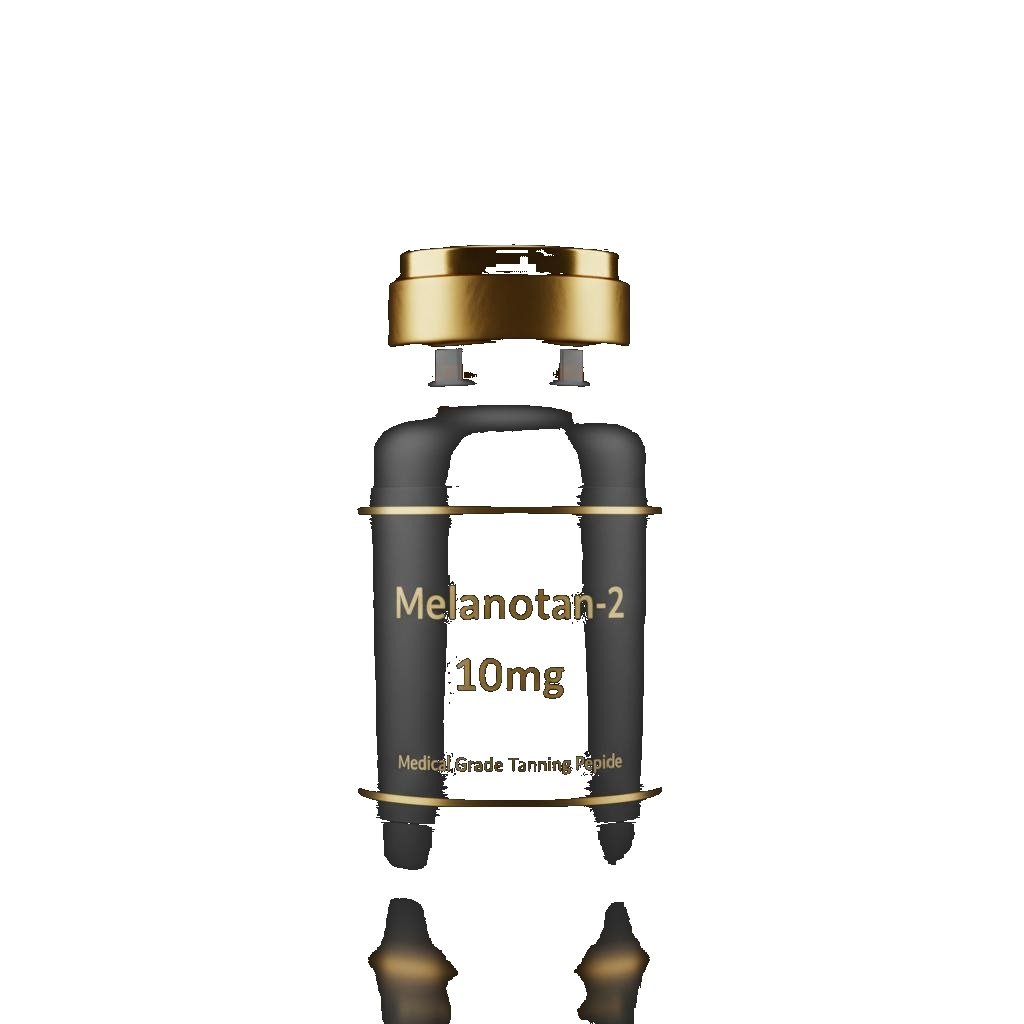
For the 10mg vial, adding 2mL of bacteriostatic water creates a concentration of 5,000 mcg/mL. At a loading dose of 500 mcg, each injection uses 0.1mL (10 units on a U-100 insulin syringe), providing 20 doses per vial. Inject subcutaneously in the abdomen, thigh, or upper arm. Rotate injection sites with each dose. UV exposure should be moderate and controlled — Melanotan-2 is not a replacement for sunscreen. For research purposes only.
Side Effects & Safety
The most commonly reported side effect of Melanotan-2 is nausea, occurring in approximately 12.9% of subjects at typical doses. This is the primary dose-limiting side effect and is the reason for starting with a low test dose. Facial flushing, fatigue, decreased appetite (via MC4R activation), and yawning are also frequently reported. Sexual side effects include spontaneous erections in males (MC4R-mediated) and increased libido in both sexes — effects that some subjects consider desirable rather than adverse.
Dermatological monitoring is critical with Melanotan-2 use. The compound causes darkening of existing moles and nevi, which is expected but requires careful observation. New mole formation and uneven pigmentation patterns have been reported. Most importantly, at least 5 cases of melanoma have been reported in individuals during or after MT-2 use. While causality has not been definitively established — and confounders include concurrent UV exposure — this association demands vigilance. Any new or changing moles must be evaluated by a dermatologist promptly. Regular comprehensive skin checks before, during, and after MT-2 use are essential.
Rare but serious reported adverse events include rhabdomyolysis (one case report), systemic toxicity, and renal dysfunction. Stomach cramps may occur alongside nausea. The FDA has issued explicit warnings against tanning injections, and health authorities in multiple countries have published safety advisories. MT-2 is not approved for any therapeutic use. Contraindications include active or history of melanoma, atypical mole syndrome, and pregnancy. This product is for research purposes only.
Storage & Reconstitution
Store the lyophilized Melanotan-2 10mg vial at 2-8°C (36-46°F) before reconstitution. For extended storage, -20°C is acceptable for sealed vials. Protect from light — MT-2 is a pigment-pathway compound and the lyophilized powder should be shielded from UV and strong light sources. Keep in original packaging or wrap in aluminum foil.
Reconstitute with bacteriostatic water (0.9% benzyl alcohol). Clean both vial stoppers with alcohol swabs. Draw 2mL of BAC water using a 21-25 gauge needle and inject slowly into the peptide vial along the glass wall. Do not shake — gently roll or swirl between palms until dissolved. The solution should be clear. For the 10mg vial with 2mL BAC water: concentration is 5,000 mcg/mL; a 250mcg dose = 0.05mL (5 units); a 500mcg dose = 0.1mL (10 units). This yields 20-40 doses per vial depending on the dose level.
After reconstitution, store at 2-8°C and use within 28 days. Never freeze reconstituted solution. In the UAE, where summer temperatures regularly exceed 45°C, proper cold chain management is essential. The UAE's intense sunlight and heat make peptide degradation a real concern — never leave reconstituted vials outside refrigeration, even briefly. Use insulated bags with cold packs for transport. Ironically, while UAE residents often seek tanning peptides for sun-related aesthetics, the same sun and heat that creates demand for the product also poses the greatest storage risk.
Frequently Asked Questions
What is Melanotan-2 and how does it work?
Melanotan-2 is a synthetic analog of alpha-MSH that activates melanocortin receptors (MC1R-MC5R) to stimulate melanin production in skin cells. By upregulating the enzymatic machinery of melanogenesis (tyrosinase, TRP-1, TRP-2), it produces tanning with substantially less UV exposure than natural sun exposure requires. Secondary effects include appetite suppression (MC4R) and libido enhancement.
How long does it take to see results?
Visible pigmentation changes typically appear within 5 doses. Fair-skinned individuals (Fitzpatrick Types I-II) need 3-4 weeks of loading with 20-50mg total cumulative dose. Medium skin types respond in 2-3 weeks, and olive/darker skin types may see results in 1-2 weeks with less total compound needed.
What are the side effects of Melanotan-2?
Nausea is the most common side effect (~12.9%). Facial flushing, fatigue, decreased appetite, and yawning are also reported. Darkening of existing moles is expected and requires dermatological monitoring. At least 5 melanoma cases have been reported during MT-2 use (causality debated). Regular skin checks are essential before, during, and after use.
Is nasal spray or injection more effective?
Subcutaneous injection provides ~100% bioavailability and is the preferred route. Nasal sprays achieve only 30-40% bioavailability, requiring 2-3x the dose and producing results 10-21 days slower. Injectable administration is significantly more reliable, consistent, and cost-effective.
How should Melanotan-2 be stored?
Store the lyophilized vial at 2-8°C. After reconstitution with 2mL bacteriostatic water, refrigerate and use within 28 days. Never freeze. In the UAE, maintain strict cold chain protocols — the same heat that creates demand for tanning compounds also poses the greatest storage risk to peptide stability.
Disclaimer: This product is sold for laboratory research purposes only. Not for human consumption. All information provided is for educational purposes and does not constitute medical advice. Consult a qualified healthcare provider before starting any peptide protocol.