Detailed Mechanism of Action
Tesamorelin is a synthetic 44-amino acid polypeptide analog of human Growth Hormone-Releasing Hormone (GHRH), distinguished by an N-terminal trans-3-hexenoic acid modification that provides enhanced stability and resistance to enzymatic degradation compared to native GHRH. Unlike exogenous HGH, which directly floods the body with growth hormone at non-physiological constant levels, tesamorelin works by stimulating the body's own growth hormone production machinery, preserving the natural pulsatile release pattern that is critical for optimal metabolic effects.
At the molecular level, tesamorelin binds to GHRH receptors on somatotroph cells in the anterior pituitary gland. This binding activates adenylyl cyclase, increasing intracellular cAMP levels, which triggers the synthesis and secretion of endogenous growth hormone. Because this process works through the body's natural feedback loop, the growth hormone release is self-limiting — the pituitary's negative feedback mechanisms prevent excess GH production, making tesamorelin inherently safer than direct HGH replacement. The natural pulsatile pattern is maintained, with GH peaks and troughs that more closely resemble youthful physiology.
Tesamorelin holds the distinction of being the first and only FDA-approved medication specifically indicated for the reduction of excess visceral adipose tissue. Visceral fat — the metabolically dangerous deep abdominal fat surrounding internal organs — is strongly associated with cardiovascular disease, insulin resistance, type 2 diabetes, and metabolic syndrome. While many compounds reduce total body fat, tesamorelin's preferential targeting of visceral fat makes it uniquely valuable for metabolic health optimization. Its effects on visceral fat are mediated through GH-stimulated lipolysis in visceral adipose depots, which are particularly responsive to GH signaling.
Clinical Evidence
Tesamorelin's clinical evidence base includes multiple large-scale trials that led to its FDA approval. The pivotal 12-month trial (N=404) demonstrated an 18% decrease in visceral adipose tissue versus placebo, measured by CT scan — the gold standard for visceral fat quantification. Shorter 26-week trials showed an average 15% reduction in visceral adipose tissue (VAT). These reductions are specifically in visceral fat, not general subcutaneous fat, making the metabolic impact disproportionately beneficial relative to the total weight change.
Beyond fat reduction, tesamorelin has demonstrated cognitive benefits in clinical research. A study evaluating 1mg daily over 20 weeks showed favorable effects on cognition in both adults with mild cognitive impairment and healthy older adults. Improvements were documented in executive function, verbal memory, and visual memory — effects believed to be mediated through the GH/IGF-1 axis's influence on hippocampal function and neuroplasticity. This cognitive enhancement is an increasingly studied benefit of GH-axis optimization.
Tesamorelin was originally approved as EGRIFTA in 2010 for HIV-associated lipodystrophy. A newer weekly reformulation, EGRIFTA WR, was approved in 2025 at a 1.28mg once-daily dose. Off-label applications being investigated include visceral fat reduction in non-HIV populations, cognitive enhancement in aging, metabolic health improvement, liver fat reduction, and comprehensive anti-aging protocols incorporating improved sleep quality, recovery, and skin condition. Clinical trials evaluated 26-52 week courses, and importantly, effects reverse upon discontinuation — indicating that ongoing therapy is needed to maintain benefits.
Dosing Protocol
The FDA-approved dose for tesamorelin is 2mg via subcutaneous injection once daily (EGRIFTA). The newer EGRIFTA WR formulation uses 1.28mg subcutaneously once daily. For research applications, 2mg daily is the standard protocol. Injection should be administered in the abdomen, rotating sites with each injection to prevent lipodystrophy. Evening administration (before bedtime) is often preferred to align with the natural nocturnal GH release cycle, though the FDA label does not specify timing.
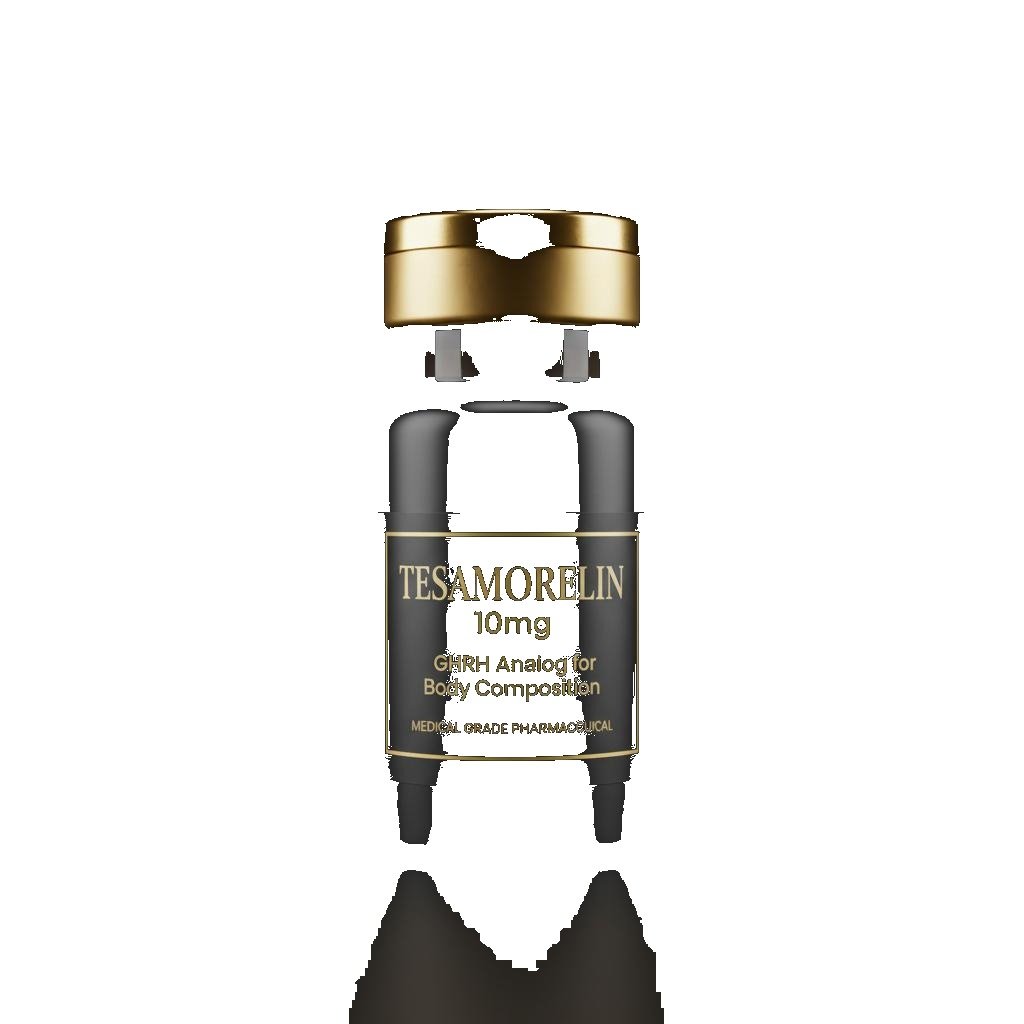
The 10mg vial from Aura Peptides provides 5 days of supply at the standard 2mg daily dose. When reconstituted with 2mL of bacteriostatic water, the concentration is 5mg/mL, and each 2mg dose requires 0.4mL (40 units on a U-100 insulin syringe). Consistent daily dosing is required for optimal results — the compound's effects are cumulative, and the GH release stimulation depends on regular receptor activation. Unlike HGH (which can use intermittent protocols), tesamorelin works best with daily administration.
Clinical trials evaluated treatment periods of 26-52 weeks. Effects on visceral fat, IGF-1 levels, and body composition reverse upon discontinuation, indicating that tesamorelin is a maintenance therapy rather than a curative treatment. Some research protocols incorporate periodic IGF-1 monitoring to confirm that the pituitary response is adequate and to guide dose adjustments if needed. For research purposes only — all protocols should be supervised by qualified medical professionals.
Side Effects & Safety
Tesamorelin is generally well-tolerated, with a side effect profile that reflects its mechanism of stimulating natural GH production rather than providing supraphysiological replacement. The most commonly reported adverse effects include arthralgia (joint pain), injection site reactions (erythema, pruritus, pain, hemorrhage, irritation), pain in extremity, peripheral edema (mild fluid retention), and myalgia (muscle pain). These effects occur at moderate rates and are generally manageable.
Metabolic effects include the potential for glucose intolerance and fluid retention, reflecting the GH-mediated increase in insulin resistance. However, because tesamorelin produces physiological rather than supraphysiological GH levels (due to its self-limiting feedback mechanism), the degree of glucose disruption is typically less than that seen with exogenous HGH at equivalent metabolic doses. Regular glucose monitoring is still recommended, particularly in subjects with pre-existing insulin sensitivity concerns.
Injection site reactions are among the more common complaints and include erythema, pruritus, pain, urticaria, hemorrhage, and irritation at the injection site. Rotating injection sites within the abdominal region helps minimize these effects. Rare hypersensitivity reactions have been reported. Contraindications include active malignancy (theoretical risk of promoting tumor growth through GH/IGF-1 axis activation), known hypersensitivity to tesamorelin or mannitol, pregnancy (Category X), and disruption of the hypothalamic-pituitary axis from surgery, radiation, or trauma. This product is for research purposes only.
Storage & Reconstitution
Store the lyophilized Tesamorelin 10mg vial at 2-8°C (36-46°F) before reconstitution. The sealed vial may be stored frozen at -20°C for long-term preservation. Protect from light and moisture. Tesamorelin is a 44-amino acid polypeptide — larger than tetrapeptides like epithalon but smaller than HGH — and requires standard peptide handling precautions.
Reconstitute with bacteriostatic water (0.9% benzyl alcohol). Alcohol-swab both vial stoppers and allow to dry. Using a 21-25 gauge reconstitution needle, draw 2mL of BAC water. Inject slowly into the peptide vial along the glass wall. Do not shake — gently swirl or roll between palms until completely dissolved (1-3 minutes). Verify the solution is clear and free of particulates. At 2mL BAC water in a 10mg vial: concentration = 5mg/mL; each 2mg dose = 0.4mL (40 units on U-100 syringe); vial provides 5 days of supply.
After reconstitution, refrigerate at 2-8°C and use within 28 days. Never freeze reconstituted tesamorelin. In the UAE climate, where temperatures regularly exceed 45°C in summer, cold chain management is especially important. Since tesamorelin requires daily dosing, the vial will be accessed frequently — minimize time outside refrigeration during each use. Return the vial to the refrigerator immediately after drawing each dose. Use insulated bags for any transport, and inspect delivery packaging for signs of temperature excursion.
Frequently Asked Questions
What is Tesamorelin and how does it work?
Tesamorelin is an FDA-approved synthetic GHRH analog that stimulates the pituitary gland to produce and release endogenous growth hormone. Unlike exogenous HGH, it maintains the body's natural pulsatile GH release pattern and is self-limiting through negative feedback. It is the only compound specifically FDA-approved for reducing visceral adipose tissue.
What is the recommended dosing protocol?
The standard dose is 2mg subcutaneously once daily, preferably in the evening. Inject in the abdomen with consistent site rotation. The 10mg vial provides 5 days of supply at this dose. Clinical trials evaluated 26-52 week treatment periods. Consistent daily dosing is essential — effects are cumulative and reverse upon discontinuation.
What are the side effects of Tesamorelin?
Common side effects include joint pain, injection site reactions (redness, itching, pain), peripheral edema, and muscle pain. Glucose intolerance may occur but is generally less pronounced than with exogenous HGH due to the self-limiting mechanism. Serious side effects are rare. Regular glucose and IGF-1 monitoring is recommended.
How does Tesamorelin compare to HGH?
Tesamorelin stimulates natural GH production while maintaining pulsatile release and negative feedback. HGH directly replaces GH at constant levels, suppressing natural production. Tesamorelin is generally better tolerated, more affordable, and produces more physiological GH patterns. HGH is more potent but carries more side effects including insulin resistance and joint issues.
How should Tesamorelin be stored?
Store lyophilized vials at 2-8°C. After reconstitution with BAC water, refrigerate and use within 28 days. Never freeze reconstituted solution. In the UAE, maintain strict cold chain protocols — return the vial to the refrigerator immediately after each daily dose, and use insulated transport during summer.
Disclaimer: This product is sold for laboratory research purposes only. Not for human consumption. All information provided is for educational purposes and does not constitute medical advice. Consult a qualified healthcare provider before starting any peptide protocol.